Winter Acne in Canberra: Why Dry Weather Can Trigger Breakouts and How to Calm Your Skin
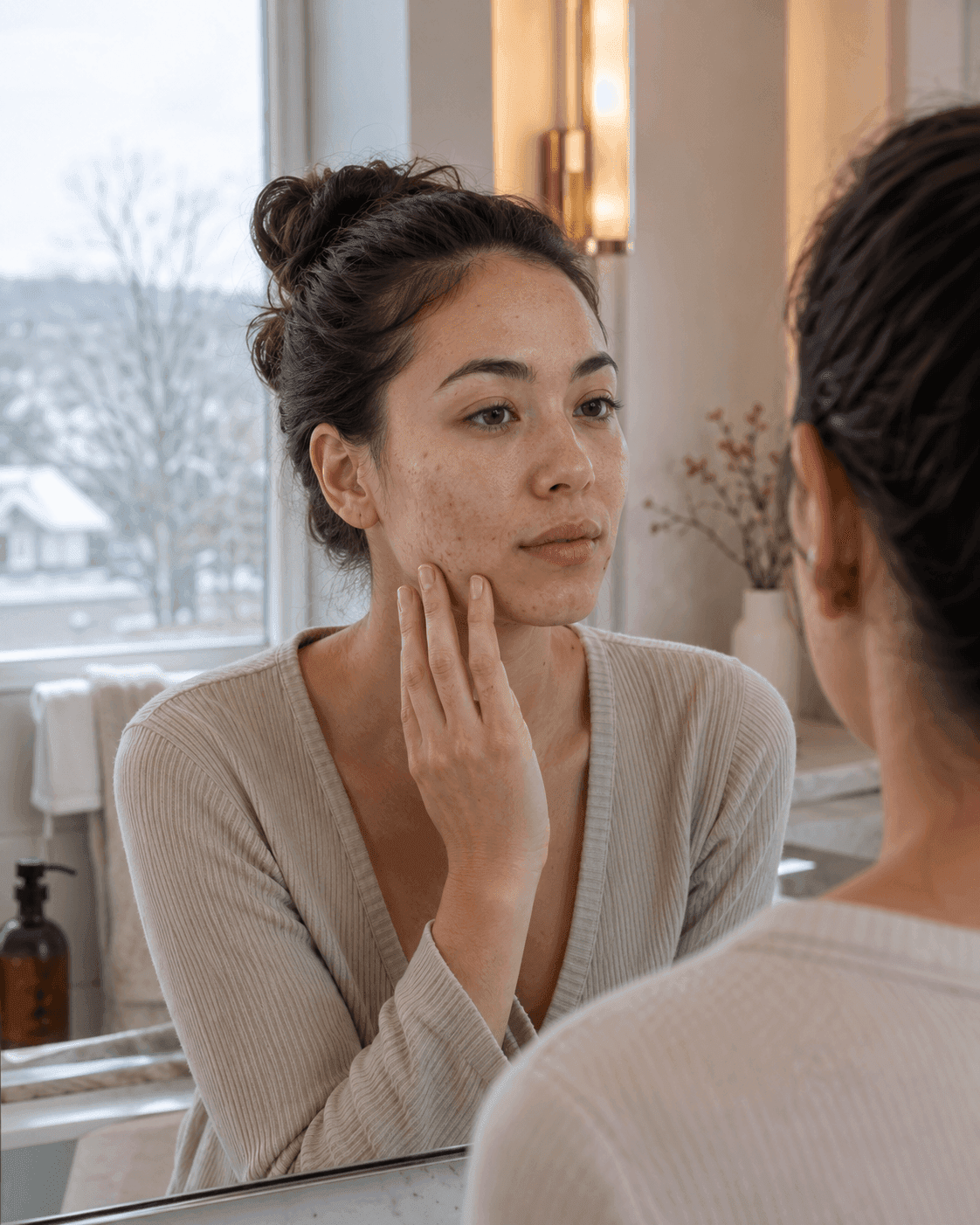
It often begins in the middle of a Canberra winter. The mornings are cold, the air feels dry, the heater runs for hours, and your skin starts to feel tight before lunchtime. At first, *Mia*, a 28-year-old professional, thought it was just seasonal dryness. Her cheeks felt rough, her usual cleanser suddenly felt too strong, and her makeup started clinging to flaky patches.
Then the breakouts appeared.
Small bumps formed around her chin and jawline. A few red pimples became tender. Old acne marks looked more obvious against dull, dehydrated skin. Like many people searching for acne treatment Canberra, Mia was confused. How could her skin feel dry and oily at the same time? Why was she breaking out more in winter, when she usually associated acne with sweat, heat, and summer?
What she needed was not another harsh product or an aggressive routine. She needed to understand what Canberra’s seasonal changes were doing to her skin barrier, and why winter breakouts often need a calmer, more strategic approach.
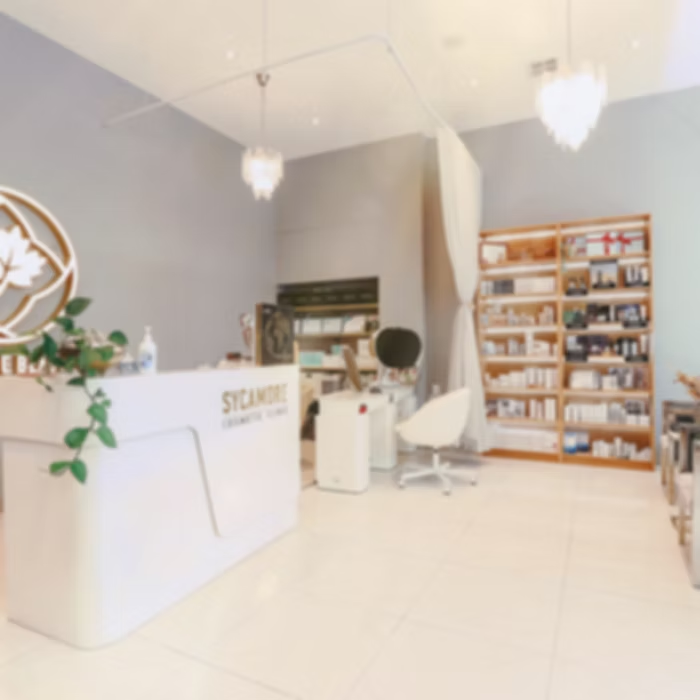
That is when she found Sycamore, a premium Canberra skin clinic offering personalised acne care and advanced treatment options such as AC Dual Acne Treatment. For clients dealing with breakouts, post-acne marks, acne scarring, enlarged pores, or uneven texture, Sycamore helps move the focus from panic-treating pimples to building a real skin recovery plan.
The Turning Point: Why Canberra Winter Can Make Acne Worse
Canberra winters are not just cold. They can be cold, dry, and harsh on the skin. According to Bureau of Meteorology climate statistics for Canberra Airport, winter mean minimum temperatures sit close to freezing, especially in June and July. For many locals, that means moving between cold outdoor air and heated indoor spaces several times a day.
This constant change can leave the skin feeling tight, reactive, and easily irritated. When the skin barrier is healthy, it helps hold moisture in and keep irritants out. When it becomes stressed or disrupted, the skin can feel rough, flaky, sensitive, and inflamed.
For acne-prone skin, this can create a frustrating cycle. The skin feels dry, so you apply heavier products. The pores feel congested, so you use stronger actives. The skin becomes more irritated, and the breakouts become harder to calm.
For clients like Mia, winter acne is rarely caused by one simple factor. It is often a combination of dry air, indoor heating, reduced skin hydration, stronger skincare, stress, makeup, and an already vulnerable skin barrier. The result is skin that feels uncomfortable, looks dull, and breaks out at the same time.
This is why treating winter acne in Canberra should not be about stripping the skin. It should be about calming, repairing, and choosing the right level of professional support.
Why Acne Can Flare When Your Skin Feels Dry
Acne is often linked with oil, but dry or dehydrated skin can still be acne-prone. Healthdirect explains that acne can happen when pores become blocked with oil and dead skin cells, creating spots, pimples, inflammation, and sometimes deeper lesions.
In winter, the issue is often not simply “too much oil”. Instead, the skin may be producing oil while also lacking water. This is why the face can feel tight after cleansing but shiny by afternoon. When the barrier is compromised, dead skin cells may not shed evenly, pores may become congested, and inflammation can look more obvious.
This is also why acne can feel so confusing. What appears on the surface may actually be several concerns happening together. There may be active pimples, clogged pores, dryness, redness, sensitivity, and old marks all present at once.
DermNet notes that acne treatment depends on the type and severity of acne, which is why guessing with random skincare often leads to frustration. A routine that helps mild congestion may not be enough for inflamed acne. A strong exfoliant may make a damaged skin barrier worse. A heavy cream may help dryness but increase congestion for some skin types.
For Canberra clients, the first step is understanding what the skin needs right now. If the skin is inflamed and reactive, calming the barrier may come first. If active acne has settled but marks, pores, and uneven texture remain, a treatment such as AC Dual Acne Treatment may become part of the next stage.
The Common Mistake: Treating Winter Acne Too Aggressively
When breakouts appear, it is tempting to do more. More exfoliation. More spot treatment. More cleansing. More active ingredients.
But in winter, this approach can backfire.
A person might use a foaming cleanser in the morning, a salicylic acid toner at night, a retinoid on top, and a drying spot treatment whenever a pimple appears. At the same time, they may be sitting in heated rooms, walking outside in icy air, drinking less water, and wearing heavier moisturiser or makeup to hide dryness.
The skin becomes caught between congestion and irritation.
This is where many acne routines fail. They focus only on fighting the breakout, not supporting the skin that has to heal from it. For Mia, the turning point was realising that her skin was not dirty or “bad”. It was overwhelmed. Once she stopped treating every breakout like an emergency, she could start thinking about the bigger picture: skin barrier support, inflammation control, pore congestion, post-acne marks, and long-term skin texture.
What Climate-Triggered Acne Needs First
When climate changes trigger breakouts, the best response is usually not to change everything overnight. A calmer approach often works better.
Start by looking at how your skin feels after cleansing. If it feels tight, hot, itchy, or uncomfortable, your cleanser may be too strong for winter. If your skin looks shiny but still feels dehydrated, it may need water-based hydration rather than heavier products that can clog pores. If your skin stings when you apply products, it may be a sign that your barrier needs support before adding more actives.
Even in winter, sunscreen remains important. Cancer Council recommends using sunscreen whenever UV levels are 3 or above. This matters for acne-prone skin because UV exposure can worsen the appearance of pigmentation and uneven tone after breakouts. Sunscreen is not just about preventing sunburn; it is also part of protecting the skin while acne marks are fading.
A simple winter acne routine may begin with a gentle cleanser, a barrier-supportive moisturiser, daily sunscreen, and fewer overlapping active ingredients. Once the skin is calmer, professional treatments can be considered more safely and strategically.
When Breakouts Leave Marks Behind
For many people, the frustration does not end when the pimple disappears. Red marks, brown marks, uneven texture, enlarged pores, and small scars can remain long after active acne has settled.
This is where acne care becomes more than breakout control.
DermNet’s information on post-inflammatory hyperpigmentation explains that pigmentation can follow inflammation or injury to the skin. For acne-prone clients, this means a breakout can leave visible discolouration even after the active pimple has healed.
This can be especially upsetting for clients who feel their skin is “clearer” but still does not look clear. The texture may still look uneven. Pores may appear larger. Acne pits may catch the light. Makeup may sit differently across marked or rough areas.
For clients at this stage, professional skin resurfacing may be considered once the skin is suitable.
Introducing AC Dual: Acne Scarring and Texture Support at Sycamore
For clients whose acne journey has moved beyond occasional breakouts, Sycamore offers AC Dual Acne Treatment, an advanced non-surgical skin resurfacing treatment designed to improve acne scarring, post-acne marks, enlarged pores, and uneven skin texture.
AC Dual uses NanoFractional Radiofrequency technology with Venus Viva™ to deliver controlled energy beneath the skin’s surface. This supports the skin’s natural collagen renewal process, making it especially relevant for people dealing with acne pits, post-acne marks, rough texture, or visible pores after repeated breakouts.
Unlike a basic facial that mainly refreshes the surface, AC Dual is designed to work beneath the surface. It does not replace good homecare or medical acne management when needed, but it can play an important role in improving the visible aftermath of acne once the skin is ready.
For someone like Mia, this distinction mattered. She did not only want fewer pimples. She wanted the marks to fade, the texture to look smoother, and her skin to feel more even again.
Why Timing Matters: Calm First, Resurface Later
Not every acne-prone skin is ready for resurfacing straight away. If the skin is actively inflamed, very sensitive, sunburnt, infected, or damaged from overuse of actives, the first step may be to calm and rebuild.
This is where a personalised consultation matters. At Sycamore, the treatment pathway can be adapted based on what the skin is showing on the day, not just what the client wants in the long term.
Some clients may need to simplify their routine, reduce irritation, and focus on hydration before starting more advanced treatments. Others may be suitable for a structured course focused on scarring, marks, pores, and texture.
A good acne plan is not always the strongest plan. It is the plan your skin can tolerate consistently.
For Canberra winter skin, this is especially important. Cold mornings, low temperatures, and indoor heating can make the skin more reactive. If the barrier is already struggling, too much too soon can make redness, peeling, and discomfort worse. The better approach is to work with the skin, not against it.
What AC Dual Can Help Improve
AC Dual is best understood as part of a post-acne repair and skin texture pathway. The treatment is designed for clients concerned about acne scarring, post-acne discolouration, enlarged pores, and uneven skin tone or texture.
According to Sycamore’s AC Dual Acne Treatment page, the treatment may help improve acne pits and indented acne scarring, fade post-acne marks and uneven pigmentation, smooth rough texture, support overall skin resurfacing, and refine the look of enlarged pores.
The benefit is not usually an overnight transformation. Skin resurfacing and collagen renewal take time. Sycamore recommends a course of 3 to 4 treatments, spaced 4 to 6 weeks apart, with gradual improvement as collagen renewal progresses.
This slower timeline can actually be reassuring. For clients who want natural-looking improvement, a gradual approach allows the complexion to become smoother, clearer, and more refined over time.
As Mia described it, “I stopped expecting one product to fix everything. Once I understood my skin needed stages, the whole process felt less stressful.”
Treatment Experience and Recovery
For clients who feel nervous about resurfacing treatments, it can help to know what the experience generally involves.
Sycamore’s AC Dual treatment usually takes around 30 to 45 minutes, with topical numbing cream applied beforehand. During treatment, clients may feel warmth, mild prickling, or tingling. After treatment, mild redness, swelling, warmth, dryness, sensitivity, or light micro-crusting may occur as the skin renews.
Most clients return to normal activities within a short period, but skin recovery is still important. Sycamore advises using repair and soothing products consistently during the recovery phase, avoiding sun exposure, applying broad-spectrum sunscreen daily, avoiding makeup until redness has significantly reduced, and avoiding exfoliating or active skincare products for a period after treatment.
This aftercare is especially important for acne-prone skin. The goal is not to irritate the skin into change. The goal is to support healing so the skin can renew safely and gradually.
How to Respond When Climate Changes Trigger Acne
When acne flares during seasonal change, the instinct is often to change everything at once. But a better response is to slow down and observe what your skin is telling you.
If your skin feels tight, stings after cleansing, looks shiny but flaky, or breaks out after adding new actives, your barrier may need support. A gentle cleanser, consistent moisturiser, and daily sunscreen may sound basic, but they are often the foundation that makes every other treatment work better.
If your acne is painful, severe, recurring, or starting to scar, it is worth seeking professional advice. Healthdirect notes that untreated acne can sometimes leave scars, and more severe acne may require medical care.
For post-acne texture, enlarged pores, and marks after breakouts, professional treatments may become the next step. This is where Sycamore’s AC Dual treatment can support clients who want to move beyond daily skincare and address the longer-term visible effects of acne.
The Sycamore Difference: A Plan That Fits Canberra Skin
What makes Sycamore’s approach valuable is the way it considers the whole skin journey. Acne is not just an active breakout. It can involve sensitivity, congestion, barrier damage, inflammation, pigmentation, scarring, enlarged pores, and emotional stress.
For Canberra clients, seasonal change adds another layer. Winter can make skin feel dry and reactive. Spring can bring new environmental triggers. Summer can increase sweat, sunscreen use, and congestion. A strong acne plan should be flexible enough to adjust as the skin changes.
At Sycamore, the focus is not on harshly stripping the skin into submission. It is on professional assessment, suitable treatment selection, and realistic expectations. For some clients, that means calming and strengthening first. For others, it means progressing toward advanced resurfacing with AC Dual Acne Treatment when the skin is ready.
The Perfect Pairing: Barrier Care and Professional Treatment
The best acne results often come from pairing daily skin discipline with the right professional treatment. Homecare helps keep the skin stable between appointments. Professional treatments can then target concerns that skincare alone may not fully improve, such as acne scarring, uneven texture, and enlarged pores.
This is why the acne journey should not be rushed. A client may begin by calming winter sensitivity, reducing product overload, and supporting hydration. Once the skin is more stable, treatments like AC Dual may be introduced to help refine texture and improve the look of post-acne damage.
Over time, the goal is skin that feels less reactive, looks more even, and no longer needs to be hidden under layers of makeup. For clients like Mia, the confidence shift can be just as meaningful as the visible skin change.
Ready to Calm Winter Breakouts and Rebuild Clearer Skin?
Searching for acne treatment Canberra does not mean you have failed with skincare. It often means your skin needs a more thoughtful plan, especially when climate changes, winter dryness, and barrier damage are making breakouts harder to control.
At Sycamore, acne care is approached with patience, precision, and respect for your skin’s condition. Whether you are dealing with active breakouts, post-acne marks, acne pits, enlarged pores, or uneven texture, the right starting point is a personalised consultation.
Explore Sycamore’s acne treatment here: AC Dual Acne Treatment
Explore Sycamore’s full treatment menu here: Sycamore Medi Spa Treatments