LDM Facial Canberra: Is It Suitable for Sensitive or Stressed Skin?
Some days, your skin seems perfectly happy. Other days, even your usual moisturiser feels uncomfortable.
Perhaps your cheeks look flushed after a warm shower. Your face feels tight despite applying skincare, or you've noticed that products you once enjoyed suddenly seem too strong.
When your skin is feeling sensitive or stressed, the last thing you probably want is an aggressive facial treatment.
It's understandable to start looking for something gentler.
If you've been searching for an LDM Facial in Canberra, you may have come across Local Dynamic Micro-massage, an ultrasound-based treatment offered for cosmetic skin care and recovery support.
Unlike traditional exfoliating facials or treatments focused on resurfacing the skin, LDM uses ultrasound energy delivered through a treatment handpiece.
It's often discussed in relation to skin comfort, hydration and supporting the appearance of skin following certain aesthetic procedures.
But does that mean it's suitable for everyone with sensitive skin?
Not necessarily.
Sensitive skin can have many causes, ranging from temporary dryness to conditions that require medical treatment. Understanding that difference is important before choosing any facial.
At Sycamore, LDM is available as part of the clinic's skin recovery and lifting treatment options.
This guide explains how LDM technology works, which concerns may be worth discussing during a consultation, what treatment feels like and how to look after your skin afterwards.
Most importantly, we'll explore what LDM may help with — and when seeing a healthcare professional should come first.
What Is an LDM Facial?
LDM stands for Local Dynamic Micro-massage.
Despite the name, it isn't a traditional facial massage performed with the hands.
Instead, LDM is a technology that uses ultrasound waves to create rapidly changing mechanical effects within targeted tissue.
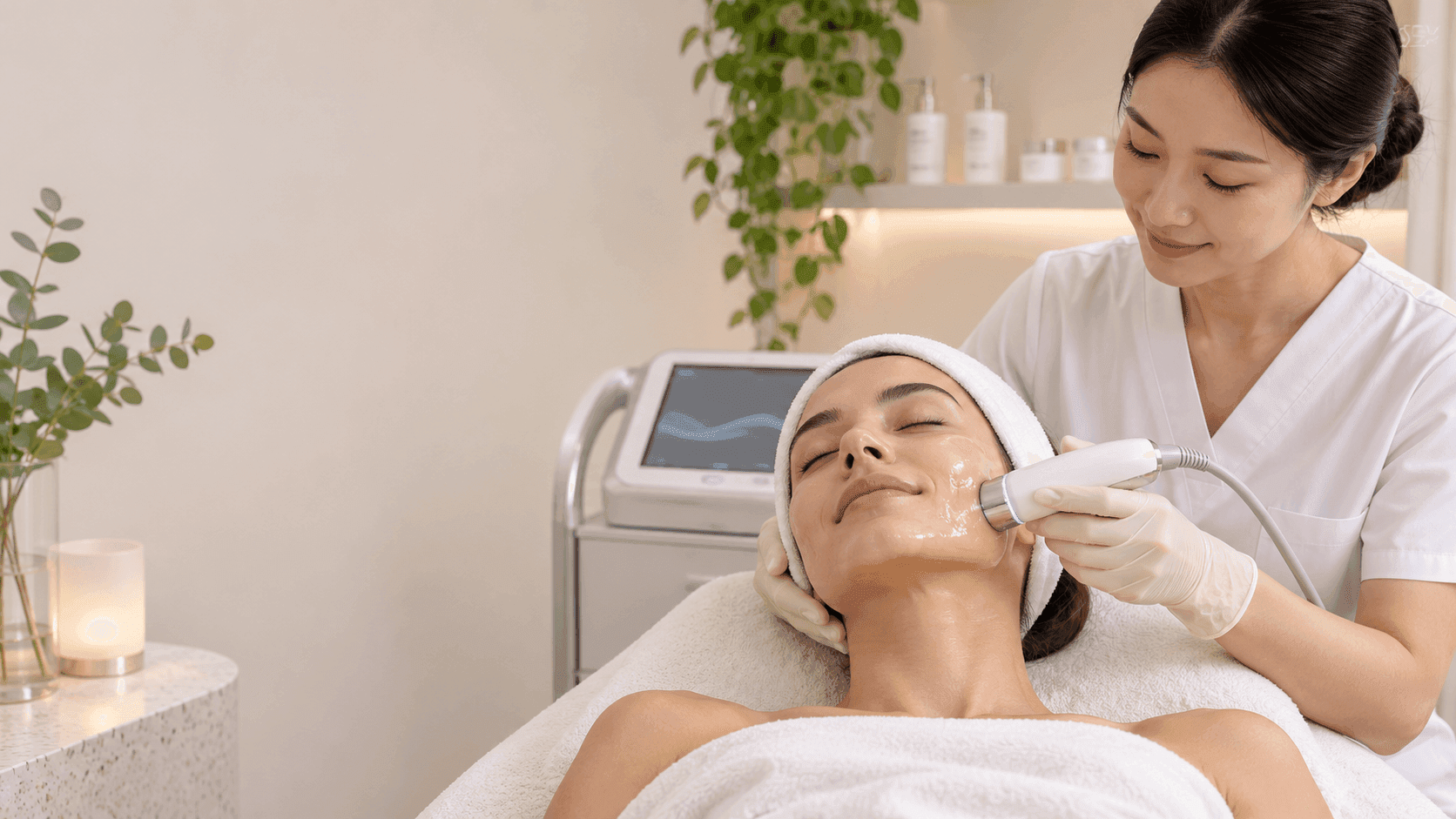
The treatment is delivered through a handheld applicator placed against the skin, usually with a coupling gel.
As the practitioner moves the applicator across the treatment area, ultrasound energy is delivered according to the selected settings and protocol.
LDM technology was developed by the German manufacturer Wellcomet, which produces ultrasound-based systems for aesthetic and medical applications.
The technology is used in different settings, including cosmetic skin treatments and certain professionally supervised dermatological applications.
However, it's important to distinguish between the capabilities of a medical-grade device and the benefits that can be expected from a particular cosmetic facial.
The intended use, device model, practitioner qualifications and individual treatment protocol all matter.
For someone exploring a facial because their skin feels stressed or easily irritated, LDM may be an option worth discussing — but it isn't automatically suitable simply because it's non-invasive.
How Does Local Dynamic Micro-massage Technology Work?
Ultrasound technology is used in many areas of healthcare and aesthetics.
You may be familiar with ultrasound from medical imaging, but ultrasound energy can also be used in therapeutic devices.
LDM works differently from a conventional facial massage or a laser procedure.
Rather than using light to target the skin, it uses high-frequency mechanical waves.
Multiple Ultrasound Frequencies
One of the features of LDM technology is its ability to work with different ultrasound frequencies.
Some LDM systems combine frequencies such as 1 MHz, 3 MHz and 10 MHz. Certain newer systems also incorporate additional frequencies.
These frequencies interact with tissue at different depths.
For example, the manufacturer explains that 10 MHz ultrasound acts more superficially than 1 MHz ultrasound, making it relevant to treatments focused on the upper layers of the skin.
Depending on the model and protocol, LDM can switch rapidly between selected frequencies during treatment.
This alternating pattern is what distinguishes the technology from conventional single-frequency ultrasound applications.
You can explore the technical background through Wellcomet's official explanation of LDM technology.
The exact frequencies and capabilities available at Sycamore should be confirmed during consultation, because different LDM devices and configurations exist.
What Does the Micro-massage Effect Actually Mean?
The term *micro-massage* describes the mechanical effects produced by ultrasound waves within tissue.
It doesn't mean the treatment is physically kneading your skin like a traditional massage.
Instead, the ultrasound creates rapid changes in pressure within the targeted area.
Manufacturers propose that these effects may influence processes associated with connective tissue and skin condition.
Some laboratory and clinical research has explored ultrasound-related effects on skin tissue, including biological pathways involved in tissue remodelling.
However, that doesn't establish that every cosmetic LDM facial produces a measurable improvement in skin barrier function, inflammation or healing.
Evidence for specific facial outcomes remains limited, and findings from different devices or medical applications should not be assumed to apply to every aesthetic treatment.
For clients, the practical distinction is simple: LDM is a technology-assisted treatment, but its effects depend on the device, settings and individual skin condition.
Why Do People Consider LDM for Sensitive or Stressed Skin?
Sensitive skin can be frustrating because the symptoms aren't always consistent.
One week, your usual skincare routine works beautifully.
The next, your skin feels dry, looks flushed or reacts to products you've used for months.
Some people experience sensitivity during seasonal changes, while others notice it after introducing too many active skincare ingredients.
In Canberra, the combination of cold winters, indoor heating, dry-feeling environments and sun exposure can also influence skin comfort.
People researching LDM often have concerns such as:
- Skin that feels tight or uncomfortable
- Temporary dryness and dehydration
- A flushed or stressed-looking complexion
- Skin that feels sensitive after cosmetic treatments
- Mild changes in texture or firmness
- A desire for a non-exfoliating facial option
LDM may be considered as part of an aesthetic treatment plan addressing some of these concerns.
However, redness, dryness and sensitivity are symptoms — not diagnoses.
The cause matters.
If your skin is reacting because of an allergy, active dermatitis, rosacea or an infection, a cosmetic facial may not be the right starting point.
Is LDM Suitable for Sensitive Skin?
Potentially, but suitability depends on what's causing the sensitivity.
One person may have naturally dry skin that occasionally feels tight.
Another may be experiencing an active inflammatory skin condition.
Although they might describe their skin as sensitive, their treatment needs could be completely different.
When LDM May Be Worth Discussing
You may wish to ask about LDM if your skin is generally stable but you're looking for a non-invasive, ultrasound-based facial.
It may also be worth discussing if you've noticed mild dryness, occasional sensitivity or changes in skin comfort.
For people who find intensive exfoliation uncomfortable, understanding whether a non-exfoliating treatment would be appropriate can be useful.
However, even a treatment described as gentle can cause unwanted reactions.
Your practitioner should assess the skin before deciding whether LDM is suitable.
When You Should Postpone Treatment
Sycamore advises against treating areas with open wounds, active infections, cold sores, significant sunburn, severe acne flare-ups or substantial skin irritation.
These precautions are especially relevant if your skin already feels inflamed.
Trying to treat an active reaction with another cosmetic procedure may make it harder to identify what's causing the problem.
If you're experiencing unexplained redness, swelling, pain or persistent irritation, seek an appropriate medical assessment before booking.
And if a product has recently caused a noticeable reaction, allowing your skin to recover may be more important than adding another treatment.
Can LDM Help Repair a Damaged Skin Barrier?
You've probably heard the phrase *damaged skin barrier* used in skincare discussions.
The skin barrier is the outer protective layer that helps reduce water loss and limit exposure to environmental irritants.
When it's functioning well, your skin is generally better able to retain moisture and tolerate everyday conditions.
When it's disrupted, you might experience dryness, tightness, stinging or increased sensitivity.
Common contributing factors include harsh cleansers, excessive exfoliation, irritating skincare products and certain inflammatory skin conditions.
Cosmetic Recovery Support vs Actual Barrier Repair
LDM is promoted for skin conditioning and recovery support, and some treatment protocols are designed around these goals.
However, there's an important difference between a treatment intended to support skin comfort and one clinically proven to repair a damaged skin barrier.
Independent evidence is not currently strong enough to guarantee that a cosmetic LDM facial restores barrier function or resolves the underlying cause of sensitivity.
For many people, the most useful first steps remain gentle skincare and avoiding known irritants.
According to the American Academy of Dermatology's sensitive-skin guidance for rosacea, gentle cleansing, suitable moisturising products and sun protection can help reduce discomfort and support skin care.
If your skin feels persistently uncomfortable, a dermatologist can help determine whether a medical condition is involved.
LDM may be considered as an additional cosmetic treatment when appropriate, rather than a replacement for established skin care.
Can LDM Treat Rosacea, Eczema or Acne?
This is an important question because these conditions can involve redness, irritation or inflammation.
LDM technology has been investigated and marketed for a range of dermatological applications.
However, its use in medical settings does not mean a cosmetic facial should be promoted as a cure or established treatment for those conditions.
Rosacea
Rosacea is a chronic inflammatory skin condition that may cause flushing, persistent redness, visible blood vessels and acne-like bumps.
Because rosacea-prone skin can be easily irritated, treatment selection requires care.
If you have diagnosed rosacea, your existing treatment plan should remain guided by an appropriately qualified healthcare professional.
LDM should not replace prescribed medication or other evidence-based care.
Eczema and Dermatitis
Eczema and contact dermatitis can cause dryness, itching, inflammation and a disrupted skin barrier.
If your skin is actively inflamed, applying additional products or energy-based treatments may not be appropriate.
The priority should be identifying the cause and managing the condition with suitable medical advice.
Acne
Acne can range from occasional clogged pores to painful inflammatory lesions.
LDM is not an established substitute for evidence-based acne treatment.
If you have severe inflammatory acne, broken skin or an active infection, Sycamore's published precautions indicate that treatment should be avoided on affected areas.
If you're unsure whether your skin concern is cosmetic or medical, ask a GP or dermatologist before scheduling a facial.
What Is the Difference Between LDM Skin Recovery Support and Medical Treatment?
The word *recovery* can mean different things in skincare.
In an aesthetic setting, it may describe helping skin look or feel more comfortable after a cosmetic procedure.
In medicine, recovery refers to the healing process following an injury, illness or procedure.
These are not interchangeable claims.
Cosmetic Skin Recovery Support
An aesthetic LDM treatment may be incorporated into a clinic's approach to skin conditioning or post-procedure care.
For example, a practitioner may discuss LDM following certain cosmetic treatments, depending on the original procedure and how the skin is healing.
The aim may be to support the skin's appearance and comfort as part of a broader treatment plan.
However, a cosmetic add-on should not be assumed to speed wound healing or prevent complications.
Medical Treatment
Medical treatment involves diagnosing and managing a specific health condition.
For example, persistent dermatitis may require identifying allergens or prescribing medication.
An infected wound may require medical assessment and treatment.
Rosacea may require a targeted management plan.
These situations cannot be adequately addressed by simply booking a facial.
If you're considering LDM following another procedure, always follow the aftercare instructions from the original treating clinician.
Sycamore specifically advises that when LDM is used as an add-on following another treatment, the stricter aftercare guidance from the primary procedure takes priority.
What Does an LDM Facial Feel Like?
If you've never experienced ultrasound-based skincare, you might imagine a strong vibrating sensation or intense heat.
However, LDM doesn't involve needles, surgical incisions or laser resurfacing.
During treatment, a practitioner typically applies a coupling gel and moves an ultrasound handpiece across the selected area.
You may notice a smooth gliding sensation, gentle pressure or mild warmth.
Depending on the settings and individual sensitivity, some people may experience tingling or tenderness.
The treatment should not involve significant pain.
If anything feels uncomfortable, particularly if your skin is already sensitive, tell your practitioner immediately.
They can assess whether the treatment should be adjusted or stopped.
What About Redness Afterwards?
Sycamore advises that some clients may experience mild redness, warmth, slight swelling or a temporarily tight feeling.
Occasional tingling or tenderness may also occur.
These effects often settle relatively quickly, although some sensitivity can last for one or two days.
Unusual or worsening symptoms should not be dismissed as a normal part of treatment.
If you experience persistent swelling, increasing pain, blistering, a significant rash or another concerning reaction, contact the clinic promptly and seek medical care as appropriate.
What Happens During an LDM Appointment at Sycamore?
A suitable LDM appointment should begin with understanding your skin's current condition.
If you're booking specifically because your skin feels stressed or reactive, mention this when arranging your consultation.
Step 1: Skin Assessment
Your practitioner should ask about your concerns, current skincare routine, relevant medical history and recent cosmetic procedures.
Be particularly clear if you've recently experienced sunburn, a severe breakout or a reaction to a product.
Step 2: Treatment Preparation
Sycamore recommends arriving with clean skin where possible.
Avoid applying heavy makeup or thick skincare products immediately before your appointment.
The treatment area should be assessed before the practitioner applies the appropriate coupling product.
Step 3: LDM Treatment
The practitioner uses the ultrasound handpiece according to the selected treatment protocol.
The treatment area, settings and session duration depend on your individual plan.
Sycamore's published LDM page does not specify a standard session length or fixed number of recommended sessions, so it's worth confirming these details directly.
Step 4: Aftercare Advice
Following treatment, the practitioner should explain what reactions to expect and which skincare products or activities to avoid temporarily.
If LDM is being used after another aesthetic procedure, the aftercare plan should also take that procedure into account.
How Should You Prepare for an LDM Facial?
A little preparation can help make your consultation more useful.
You don't need an elaborate skincare routine beforehand.
In fact, if your skin is already sensitive, introducing new products just before treatment may be counterproductive.
Sycamore's published preparation advice includes several practical precautions.
Avoid Strong Actives if Your Skin Is Reactive
If your skin is easily irritated, Sycamore recommends avoiding retinoids, exfoliating acids such as AHAs and BHAs, and physical scrubs for approximately 24–48 hours before treatment.
If you're using prescription skincare medication, ask your prescribing healthcare professional before changing how you use it.
Tell Your Practitioner About Recent Procedures
Mention any recent laser treatment, microneedling, chemical peel, injectable treatment or other facial procedure.
Even if your skin looks normal, it may still be recovering beneath the surface.
Share Relevant Medical Information
Tell your practitioner if you're pregnant or breastfeeding, have significant medical conditions, use medication that may affect healing or sensitivity, or have implanted medical devices.
Your practitioner should assess whether the treatment is appropriate or whether medical clearance is needed.
Avoid Treatment on Irritated or Broken Skin
If you have an active cold sore, open wound, significant sunburn or severe skin flare-up, contact the clinic before attending.
Postponing a cosmetic procedure may be the safest option.
LDM Facial Aftercare: How to Look After Sensitive Skin
Aftercare is particularly important if your main reason for booking is skin sensitivity.
Even when a treatment involves little downtime, your skin may benefit from a gentler routine afterwards.
On the Day of Treatment
Sycamore recommends using a mild cleanser and moisturiser.
Avoid hot water and unnecessary rubbing.
Makeup may be applied the same day if your skin feels comfortable and your practitioner hasn't advised otherwise.
If you're experiencing redness or sensitivity, it may be better to give your skin some additional time.
During the First 24–48 Hours
If your skin feels reactive, avoid intense heat exposure, including saunas, hot baths and hot yoga.
You may also need to temporarily avoid strenuous exercise if it causes flushing.
Sycamore recommends pausing strong active ingredients, including retinoids and exfoliating acids, for 24–48 hours when the skin feels sensitive.
Avoid aggressive scrubbing or deep facial massage.
During the Following Week
Continue using familiar skincare products that your skin tolerates.
Keep your skin moisturised and maintain consistent sun protection.
Sycamore recommends daily SPF 50+ and minimising direct sun exposure, particularly for sensitive or pigment-prone skin.
If you're spending time outdoors in Canberra, remember that UV protection remains important even on cooler or cloudy days.
When Should You Contact the Clinic?
Contact Sycamore if redness, swelling or discomfort gets worse or persists beyond approximately 48 hours.
Seek prompt medical advice if you develop increasing pain, blistering, hives or other significant reactions.
Severe symptoms require urgent medical attention.
How Many LDM Sessions Will You Need?
This depends on the treatment objective.
Someone considering LDM for a one-off cosmetic skin conditioning appointment may have a different plan from someone discussing it as part of a broader post-procedure care programme.
There's no universally established session count that guarantees better hydration, reduced sensitivity or improved skin barrier function.
Your practitioner may recommend an initial appointment followed by reassessment, or discuss a course of treatments when appropriate.
Before committing to multiple sessions, ask what the expected benefit is, how progress will be evaluated and whether the recommendation is supported by evidence for your particular concern.
It's also reasonable to ask about total cost and whether maintenance appointments are expected.
If your skin isn't responding as anticipated, further treatment shouldn't automatically be the next step.
Sometimes, reassessing the underlying cause of sensitivity is more useful.
LDM vs a Traditional Hydrating Facial: Which Should You Choose?
If your skin is feeling dry or stressed, you might be wondering whether LDM is necessary or whether a regular facial would be enough.
The two approaches are different.
| Feature | LDM Facial | Traditional Hydrating Facial |
| -------- | -------- | -------- |
| Main approach | Ultrasound-based technology | Topical skincare products and facial techniques |
| Primary focus | Cosmetic skin conditioning and recovery support | Moisturising, nourishment and skin refresh |
| Technology | Local Dynamic Micro-massage ultrasound | Usually skincare products and manual application |
| Exfoliation | Not inherently an exfoliating treatment | May include gentle exfoliation |
| Treatment sensation | Gliding handpiece, pressure or mild warmth | Product application and massage |
| Suitable for sensitive skin? | Depends on skin assessment and contraindications | Depends on products, techniques and skin condition |
| Expected results | Variable cosmetic changes in comfort or appearance | Temporary moisturised, refreshed appearance |
| Medical treatment? | No, when provided as a cosmetic facial | No |
Neither option is automatically safer for every sensitive skin type.
For example, someone with a history of fragrance allergies may need to avoid certain products used during a conventional facial.
Someone with active inflammation or a recent procedure may need to postpone LDM until the skin has been properly assessed.
The best treatment is the one that addresses your actual concern without creating unnecessary irritation.
How Much Does an LDM Facial Cost in Canberra?
If you're researching LDM treatment in Canberra, it's natural to want to understand the likely cost.
However, the complete treatment price can depend on the areas being treated, your skin condition and whether LDM is recommended as a standalone appointment or part of a broader aesthetic care plan.
The number of sessions may also influence the overall investment.
Rather than assuming you need a particular treatment package, start by explaining what you're hoping to improve.
For example, you might be experiencing temporary dryness, looking for a gentler cosmetic facial or considering LDM following another aesthetic treatment.
How to Request a Personalised Quote
When contacting Sycamore, consider sharing:
- Your main skin concerns, such as dryness, sensitivity or changes in skin comfort.
- The areas you'd like assessed.
- Whether you've recently undergone another cosmetic treatment.
- Any known skin conditions, allergies or relevant medications.
- Whether you're interested in a single appointment or a recommended treatment course.
Sycamore can then help you arrange an appropriate consultation and discuss the available options.
It's also worth asking whether any current promotions or treatment packages are available.
Prices and promotions may change, so confirm the full treatment cost and inclusions before booking.
You can learn about LDM skin recovery treatments to explore the service before contacting the clinic.
Questions to Ask Before Booking an LDM Facial
If you have sensitive or reactive skin, a good consultation should leave you feeling informed rather than pressured.
Here are several questions worth asking.
1. What Could Be Causing My Skin Sensitivity?
A cosmetic practitioner may help identify visible concerns, but persistent or unexplained symptoms may require medical assessment.
Ask whether the treatment is appropriate given your current skin condition.
2. Which LDM Device and Settings Will Be Used?
Different LDM devices offer different frequency combinations and treatment protocols.
It's reasonable to ask which model the clinic uses and why the selected settings are appropriate.
3. What Improvement Can I Realistically Expect?
Ask what the practitioner hopes to improve and what evidence supports that expectation.
Avoid relying on promises of complete barrier repair or guaranteed reductions in inflammation.
4. What Are the Possible Side Effects?
Discuss temporary redness, sensitivity, swelling and any contraindications relevant to your health history.
5. Will I Need More Than One Session?
Ask whether the recommendation is for a single appointment or a course, and how your response will be reviewed.
6. Can I Combine LDM With Another Facial Treatment?
If you're interested in combining services, ask whether this is appropriate for your skin and whether additional recovery time is needed.
More treatments don't always mean better results, particularly when your skin is already stressed.
Frequently Asked Questions About LDM Facial Canberra
Is LDM suitable for sensitive skin?
LDM may be considered for some people with sensitive skin, but suitability depends on the cause of the sensitivity, skin condition and medical history. Active inflammation, infection or significant irritation may require postponement or medical assessment.
Does LDM repair the skin barrier?
LDM is promoted for skin conditioning and recovery support, but there is insufficient independent clinical evidence to guarantee repair of a damaged skin barrier from a cosmetic facial. Gentle skincare and managing underlying conditions remain important.
Is LDM the same as HIFU?
No. Although both use ultrasound technology, their intended applications and treatment protocols differ. HIFU uses focused ultrasound energy for selected tightening objectives, while LDM uses alternating ultrasound frequencies for tissue conditioning and other applications.
Is LDM painful?
The treatment generally involves a handheld applicator and coupling gel. Sensations may include gentle pressure, gliding, warmth or tingling. Tell your practitioner immediately if you experience pain or significant discomfort.
Can I have LDM after laser treatment?
LDM may sometimes be incorporated into a professionally supervised post-procedure care plan. However, suitability depends on the original procedure, healing status and treating clinician's instructions. Do not assume it is appropriate immediately after every laser treatment.
Can LDM help with rosacea?
LDM should not replace medical treatment for rosacea. If you have diagnosed or suspected rosacea, discuss cosmetic procedures with your healthcare professional before proceeding.
Is there downtime after LDM?
Downtime is often limited, but temporary redness, warmth, sensitivity or swelling can occur. Some reactions may last one or two days. Follow your practitioner's aftercare instructions.
Can I wear makeup after LDM?
Sycamore advises that makeup may be applied on the same day if your skin feels comfortable, unless your practitioner recommends otherwise. Avoid applying makeup to skin that is significantly irritated.
How often should I book LDM?
There is no universal schedule suitable for everyone. Your practitioner should assess your skin, explain the treatment objective and recommend an appropriate plan.
Thinking About LDM? Start With Your Skin's Needs
When your skin feels sensitive, it's tempting to search for a treatment that promises to calm everything down.
But skin sensitivity isn't always something that can be solved with a facial.
Sometimes, your skin needs a simpler routine, time away from irritating products or professional medical care.
In other circumstances, a carefully selected cosmetic treatment may be worth exploring.
LDM offers a non-invasive, ultrasound-based approach to skin care, and it may be an option for people interested in cosmetic skin conditioning or recovery support.
The key is understanding what the technology can realistically achieve and whether it's appropriate for your individual skin.
At Sycamore, you can explore LDM as part of the clinic's skin recovery treatment options and discuss your concerns before deciding whether to proceed.
**Learn about LDM skin recovery treatments**
If you'd like to discuss your skin condition, treatment suitability or available options, you can also book a consultation with Sycamore.
Because when your skin is feeling stressed, choosing the right care matters more than choosing the most intensive treatment.
*Disclaimer: This article provides general educational information and is not a substitute for medical advice. Cosmetic LDM treatments are not a replacement for the diagnosis or treatment of skin diseases, including rosacea, eczema, dermatitis or infection. Individual suitability, risks and outcomes should be assessed by an appropriately qualified professional.*