Ultherapy PRIME vs LIFTERA COOL Canberra: Which Lift Is Right for You?
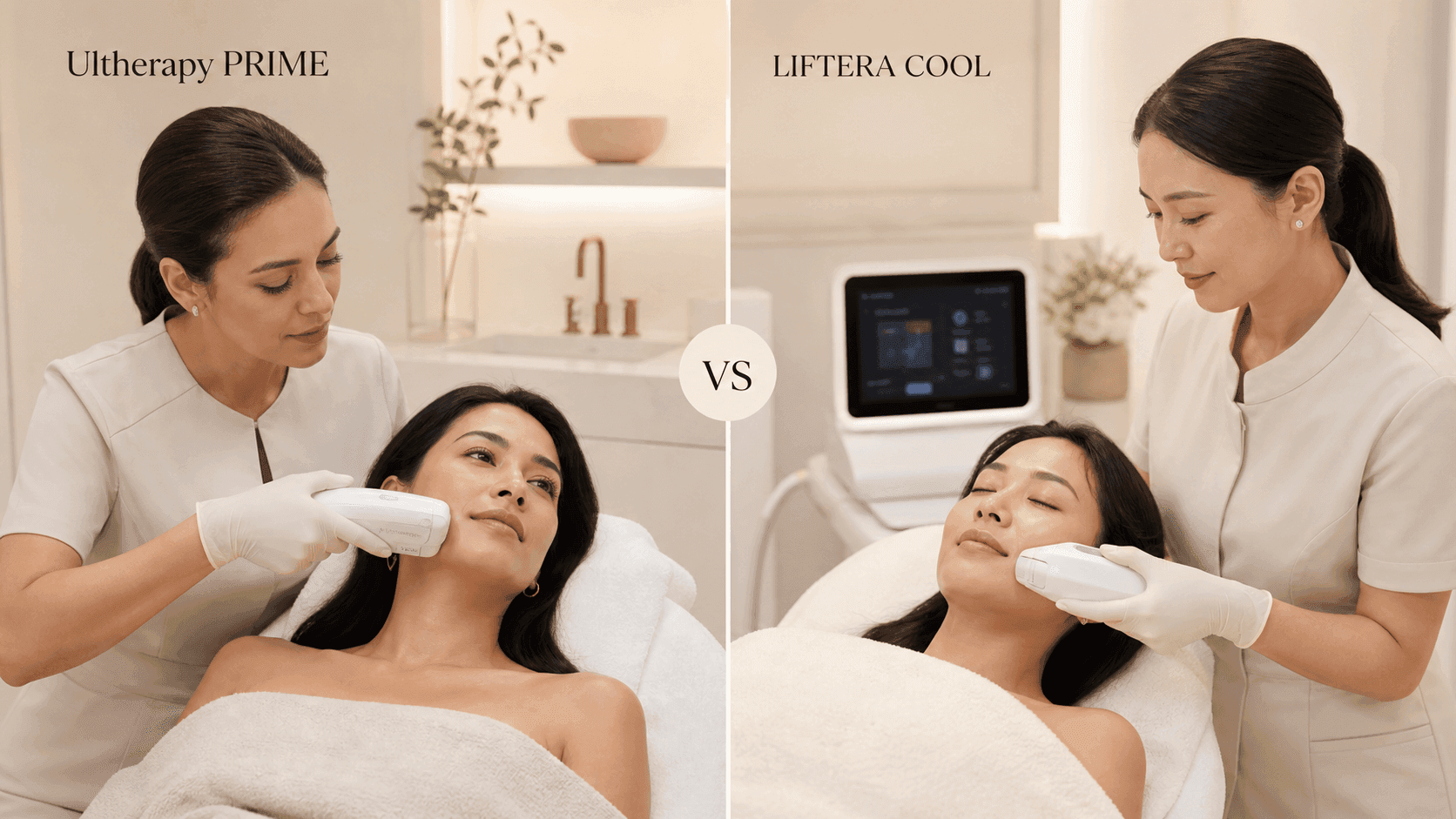
If you are looking for a non-surgical way to lift and tighten your skin in Canberra, there is a good chance you have come across two names: Ultherapy PRIME and LIFTERA COOL.
At first glance, they can sound almost interchangeable. Both use focused ultrasound energy, both are designed to stimulate collagen, and both appeal to people who want a firmer, more defined appearance without surgery.
But choosing between them should not come down to which treatment is newer, more expensive or more popular on social media.
The better question is: what kind of lifting experience and treatment approach suits your skin?
At Sycamore Medi Spa, both technologies sit within a broader range of professional skin treatments, so the conversation does not have to begin with choosing a machine. You can explore Sycamore's Ultherapy PRIME treatment and other skin and rejuvenation treatments before deciding which direction feels right.
So, rather than another technical comparison full of jargon, let's look at Ultherapy PRIME vs LIFTERA COOL from the client's point of view: precision, comfort, treatment goals, lifestyle and what you actually want to see when you look in the mirror.
The Short Answer: They Share a Goal, but Not the Same Treatment Experience
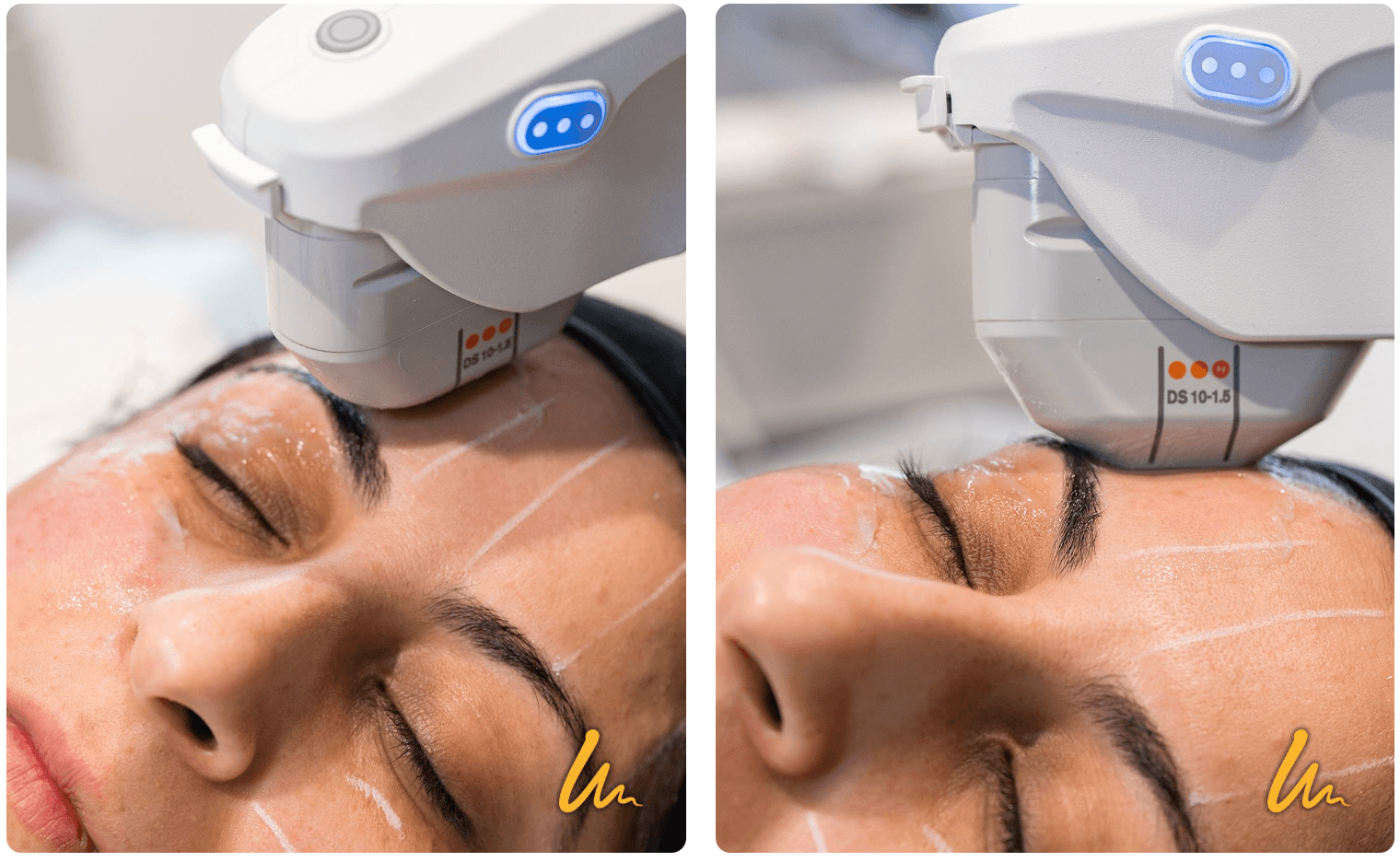
Both treatments belong to the broader category of ultrasound-based, non-surgical skin tightening.
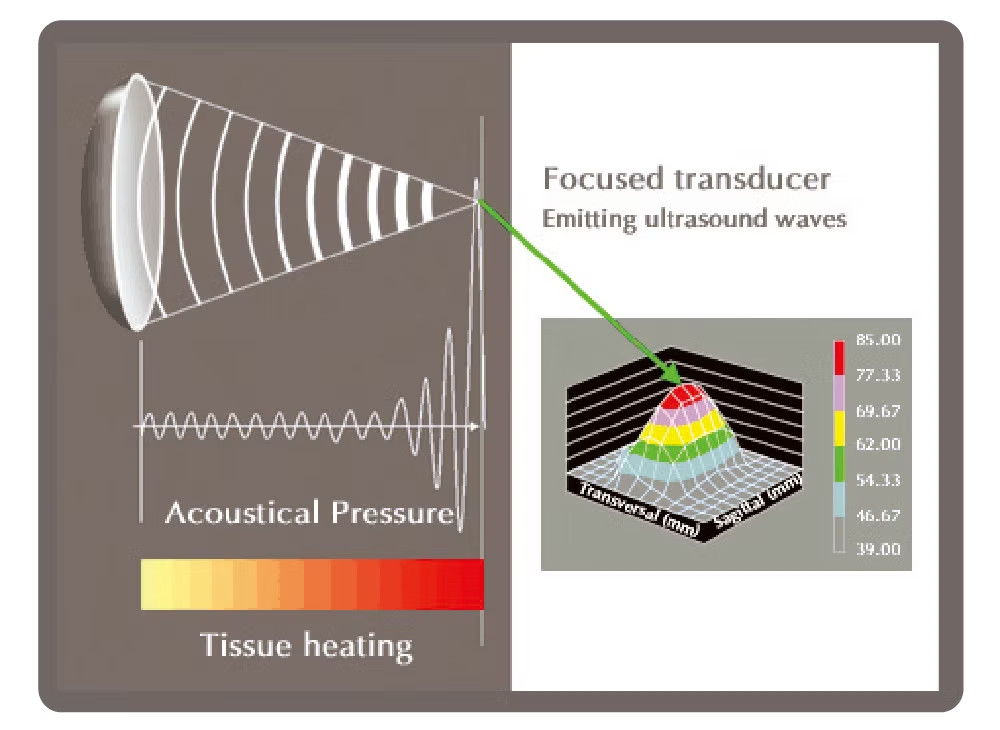
The principle behind these treatments is relatively straightforward. Focused ultrasound energy is delivered beneath the skin to create controlled thermal stimulation. This triggers a natural tissue-remodelling response, including the production and reorganisation of collagen.
There is clinical evidence behind this general approach. In a prospective study involving 103 adults, researchers evaluating microfocused ultrasound reported improvements in cheek lifting, jawline definition and submental laxity.
But this is where the similarities stop being particularly useful.
The more meaningful difference is how each platform approaches the treatment.
Ultherapy PRIME places a strong emphasis on visualisation and treatment precision. The official Ultherapy Australia website describes its real-time imaging system as allowing practitioners to see tissue beneath the skin while planning and delivering treatment.
LIFTERA COOL, meanwhile, offers another approach to focused-ultrasound lifting and may appeal to clients whose priorities include a comfortable, approachable treatment experience and gradual improvement.
Neither point automatically makes one treatment "better".
It makes them different tools for different people.
Ultherapy PRIME: When Seeing Beneath the Skin Matters
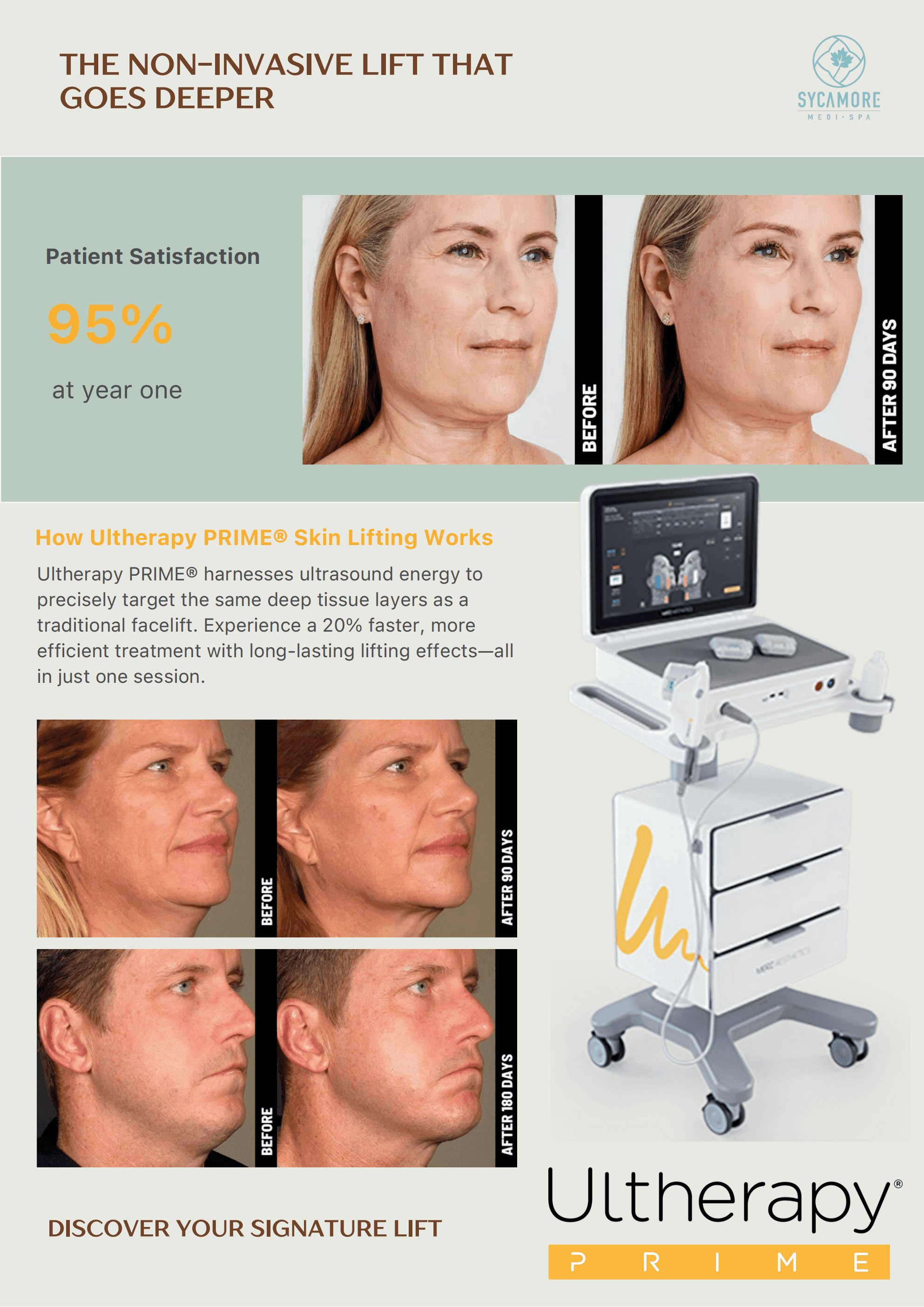
One of the most interesting things about Ultherapy PRIME is something the client cannot see simply by looking at the handpiece: the practitioner can visualise the tissue being treated.
That matters because faces are not flat, identical surfaces.
The thickness and structure beneath your jawline can differ from your cheek or brow. They can also differ substantially from another person's anatomy. This is one reason a personalised treatment plan matters more than simply requesting a particular number of treatment lines.
Ultherapy PRIME's real-time visualisation allows the practitioner to assess the tissue before and during treatment. The official Australian information describes the technology as being indicated for lifting and tightening areas including the brow, chin, neck and décolletage.
Sycamore's own Ultherapy PRIME treatment page similarly focuses on personalised lifting of the neck, under-chin and brow areas rather than presenting it as a treatment that simply makes the entire face "younger."
And the visualisation element isn't just an interesting technical feature. A study examining skin physiology after microfocused ultrasound with visualisation followed patients for 24 weeks and reported increased skin elasticity at later follow-ups, while epidermal barrier measurements remained relatively stable.
For someone researching Ultherapy Canberra, that evidence is more useful than simply hearing that a device is a "gold standard".
The attraction of Ultherapy PRIME is therefore not only ultrasound energy itself. It is the combination of energy + visualisation + personalised treatment planning.
Where Does LIFTERA COOL Fit In?
This is where comparisons often become unfair.
Ultherapy PRIME has strong name recognition, so it is tempting to treat every alternative as a cheaper or simpler version of Ultherapy. That isn't a particularly helpful way to think about LIFTERA COOL.
A better way to look at it is this:
What does the client actually want from the treatment?
Some clients are specifically seeking the real-time imaging and established clinical history associated with Ultherapy. Others are more focused on finding a non-surgical tightening option that feels manageable, fits into their routine and can be incorporated into a broader skin-maintenance plan.
If you're already researching ultrasound lifting, Sycamore's existing article on HIFU vs Facelift Canberra is worth reading because it addresses the bigger decision first: whether your goals are realistic for a non-surgical treatment at all.
That question should come before debating one ultrasound device against another.
Don't Choose Based on Age Alone
A surprisingly common question is:
*"I'm 35. Is that too young?"*
Or the opposite:
*"I'm in my 50s. Is it too late?"*
Age alone isn't a particularly useful way to choose between Ultherapy PRIME and LIFTERA COOL.
Two people of the same age can have very different levels of skin laxity because facial ageing is influenced by genetics, sun exposure, changes in facial volume, lifestyle and the underlying structure of the face.
This is especially relevant in Australia, where cumulative ultraviolet exposure deserves serious attention. Photoageing and structural laxity are not the same problem, even though they can appear together.
You may have relatively firm skin with substantial sun damage. Someone else may have an even complexion but noticeable laxity around the lower face.
Giving both people the same "anti-ageing treatment" simply because they're 42 doesn't make much sense.
This is why a proper consultation should look at what is ageing the appearance of your face, rather than simply your date of birth.
Ultherapy PRIME vs LIFTERA COOL: Think in Priorities, Not Winners
Instead of declaring a winner, it is more useful to think about what matters most to you.
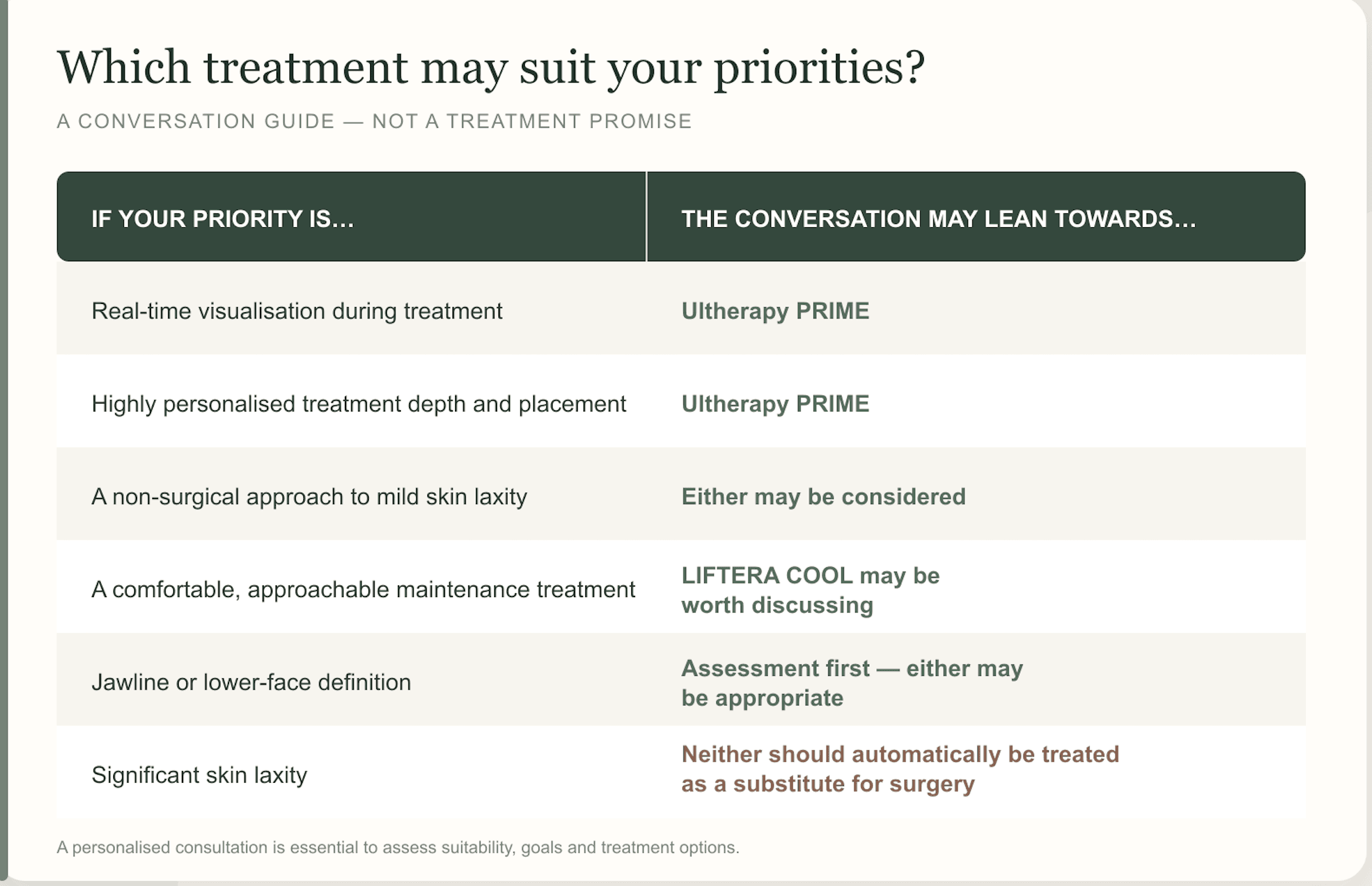
That final point is important.
The phrase "non-surgical facelift" is used constantly online, but it can create unrealistic expectations. Ultrasound treatments can improve skin firmness and mild-to-moderate laxity; they do not surgically remove excess skin or reposition facial tissues in the way a facelift does.
If you are already weighing those two very different paths, read Sycamore's HIFU vs Facelift Canberra guide before deciding that another energy-based treatment is automatically the answer.
The Question Most Comparison Articles Miss: Who Is Holding the Handpiece?
Here's the part that often gets lost when people compare machines.
The device doesn't make every treatment identical.
Treatment planning, understanding facial anatomy, selecting appropriate areas and recognising when *not* to treat are all part of the outcome.
Research into microfocused ultrasound also supports the importance of treatment planning. In a clinical study of lower-face and neck laxity, researchers found that customised treatment using different focal depths could influence aesthetic outcomes.
In other words, "Which machine is better?" is only half the question.
The other half is:
"How will this treatment be personalised to me?"
That is one reason Sycamore's approach begins with consultation rather than treating an ultrasound device like something you simply order from a menu.
If you want to see more of the clinic, treatments and day-to-day skin education before booking, Sycamore Medi Spa on Instagram also gives you a much better feel for the clinic than specifications alone.
What About Results — and How Quickly Should You Expect Them?
Neither Ultherapy PRIME nor LIFTERA COOL should be approached as an overnight transformation.
The biological process they are trying to encourage—collagen remodelling—takes time.
For Ultherapy PRIME specifically, the Australian brand information states that results can appear after around two to three months and may last up to 12 months, although individual outcomes vary.
Clinical evidence tells a similar story rather than promising an instant lift. In the 24-week physiology study mentioned earlier, measurable changes in elasticity became significant at later follow-up points.
That gradual timeline can actually be part of the appeal.
For many clients, the goal isn't to walk into work on Monday looking obviously "done". It's to notice that the jawline gradually looks a little cleaner, the skin feels firmer, and the face looks refreshed without an abrupt change.
And that brings us to perhaps the most useful way to choose between the two treatments:
don't ask which one produces the most dramatic marketing photo. Ask which treatment strategy makes sense for your face, your expectations and the amount of change you actually want.
Comfort Matters More Than Most Comparison Charts Admit
Technical specifications are useful, but they don't tell you what it actually feels like to spend an hour having a treatment performed on your face.
This is where LIFTERA COOL deserves its own discussion.
Sycamore's LIFTERA COOL treatment page explains that the platform combines HIFU with its Active Conduction Cooling (ACC™) technology. The treatment head incorporates cooling designed to reduce heat-related discomfort while ultrasound energy is delivered beneath the skin.
That makes comfort part of the technology rather than an afterthought.
For some clients, this matters enormously. Someone who has previously found ultrasound treatments uncomfortable, has a relatively low pain tolerance, or simply wants a more approachable maintenance treatment may value LIFTERA COOL for very different reasons than someone specifically seeking Ultherapy PRIME's real-time imaging.
This gives us a more useful comparison:
Ultherapy PRIME's standout feature is visualisation. LIFTERA COOL's standout feature is its cooling-enhanced treatment experience.
Neither feature should automatically determine your decision, but they give you a much better starting point than simply asking which machine is "stronger."
Ultherapy PRIME vs LIFTERA COOL: What Does the Research Actually Tell Us?
This is where it's important to separate evidence from marketing.
There is a growing body of research supporting focused and microfocused ultrasound for non-surgical facial tightening—but that doesn't mean every ultrasound device, protocol or patient will produce identical results.
A 2023 **systematic review of 16 studies on microfocused ultrasound for facial skin tightening** found measurable improvements in areas including the brow and submental region. At 90 days, pooled investigator assessments reported improvement in skin tightening and/or wrinkle reduction in 92% of evaluated patients, although patient-reported improvements were more modest and the authors noted variation in devices, settings and protocols.
Another 2023 **systematic review and meta-analysis** examined the clinical efficacy and patient satisfaction associated with microfocused ultrasound for facial rejuvenation and tightening, adding to the evidence base for ultrasound-based aesthetic treatments.
Why does this matter when choosing between two treatments?
Because the evidence suggests something much more realistic than the promise of an instant "facelift without surgery":
Ultrasound tightening can produce meaningful—but generally subtle and gradual—improvements in appropriately selected patients.
That is the expectation worth taking into your consultation.
What If Your Main Concern Is Your Jawline?
This is probably one of the most common reasons people begin researching skin tightening in Canberra.
A softer jawline doesn't necessarily mean you suddenly have "sagging skin." The lower face changes because of several interacting factors, including skin laxity, changes in facial fat, underlying anatomy and ageing of deeper structures.
That means a device cannot diagnose the reason your jawline looks different.
If the main issue is mild skin laxity, an ultrasound-based treatment may be worth discussing. If the issue involves significant volume changes or advanced laxity, repeatedly adding more ultrasound treatments may not deliver the result you have in mind.
This is one reason Sycamore's existing HIFU vs Facelift Canberra article is relevant to this decision. It explores the boundary between what non-surgical tightening can reasonably achieve and when expectations start moving closer to surgical territory.
There is also an important detail hidden in the research. The 2023 systematic review found that outcomes tended to be less favourable as skin laxity became more pronounced, reinforcing the importance of selecting appropriate candidates rather than treating ultrasound as a universal alternative to surgery.
That's a much more useful thing to know before spending money on treatment than whether one device has more social-media hype.
What If You've Never Had a Lifting Treatment Before?
First-time clients often approach this decision differently.
You might like the idea of tighter skin but still have questions about discomfort, downtime, how obvious the result will be and whether you're "too young" to start.
In that situation, don't begin by deciding:
"I want Ultherapy."
or:
"I want LIFTERA."
Begin with:
"This is the change I've noticed. What is actually causing it?"
That opens up a much more useful consultation.
Sycamore has previously shared a first-person perspective in My First Experience with Canberra Ultherapy: Why It Was Worth It, which is particularly useful if the clinical description of Ultherapy tells you *how* it works but you also want to understand the treatment from a client's point of view.
You can also read Sycamore's dedicated guide to Ultherapy PRIME as a non-surgical lifting treatment, which goes deeper into the technology itself without repeating this comparison.
This is exactly how internal links should work: one article helps you compare; another lets you explore the treatment; another shows you the experience.
One Session or a Long-Term Skin Strategy?
Here's another reason a simple "Ultherapy PRIME vs LIFTERA COOL" verdict doesn't work particularly well.
Not everybody approaches skin tightening in the same way.
Some clients want a more substantial treatment followed by time for collagen remodelling. Others prefer to think about skin maintenance as an ongoing process. Your age, degree of laxity, budget, tolerance for treatment and long-term goals can all change that decision.
Sycamore describes **Ultherapy PRIME** as a treatment designed to create a long-lasting lift from a single session, with real-time ultrasound imaging used to personalise treatment.
**LIFTERA COOL**, meanwhile, has its own treatment protocol and cooling-enhanced approach.
This is why comparing treatments solely by the price of one appointment can be misleading.
The better comparison is:
What does my treatment plan look like over the next 6–12 months?
That is a much more useful question to bring to your consultation.
So, Which One Would We Choose?
If you've read this far expecting us to declare one winner, we're going to disappoint you.
And that's intentional.
We would be cautious about any clinic claiming that one device is automatically best for every face.
If real-time ultrasound visualisation and a highly established evidence base are particularly important to you, Ultherapy PRIME has a clear point of difference. Sycamore describes PRIME as its next-generation Ultherapy platform, using ultrasound imaging to personalise treatment while targeting areas including the neck, under the chin and brow.
If comfort is high on your priority list, LIFTERA COOL's cooling-enhanced technology gives you a different reason to consider it. Its ACC™ cooling system is specifically designed around reducing heat-related discomfort during treatment.
If your skin laxity is more advanced, the better answer may be neither, or at least a conversation about realistic limitations before treatment.
That's why we don't think the most useful question is:
"Which machine wins?"
It's:
"Which treatment makes the most sense for my face?"
Before You Book: 5 Questions Worth Asking
You don't need to become an ultrasound expert before your appointment. But you should feel comfortable asking your practitioner a few useful questions:
- What exactly are we trying to improve?
- Why are you recommending this treatment for my face?
- What level of change is realistic?
- What will the treatment feel like?
- What happens if my skin laxity is too advanced for this treatment?
Those questions tell you much more than asking which machine has the highest energy setting.
And if you're still at the research stage, browsing Sycamore's full range of professional treatments can help you understand where ultrasound lifting sits within a broader skin plan.
For real clinic updates and treatment content rather than another long technical explanation, you can also follow Sycamore Medi Spa on Instagram.
The Bottom Line
Ultherapy PRIME and LIFTERA COOL are not simply two versions of the same treatment.
They share the broader goal of non-surgical skin tightening through ultrasound-based collagen stimulation, but their treatment philosophies have meaningful differences.
Ultherapy PRIME's strongest differentiator is real-time ultrasound visualisation and its established clinical evidence base. LIFTERA COOL introduces a cooling-enhanced approach designed with treatment comfort in mind.
The research on microfocused ultrasound is encouraging, but it also reinforces the need for realistic expectations: the strongest evidence supports gradual improvement in mild-to-moderate skin laxity, not surgical-level transformation.
So if you're comparing Ultherapy PRIME vs LIFTERA COOL in Canberra, don't choose from a comparison table alone.
Bring your priorities to the consultation.
Bring the areas that bother you.
Bring the result you have in mind.
Then let the treatment decision come after the skin assessment—not before it.