Why Dark Spots Keep Coming Back — And How Pigmentation Removal Laser in Canberra May Help
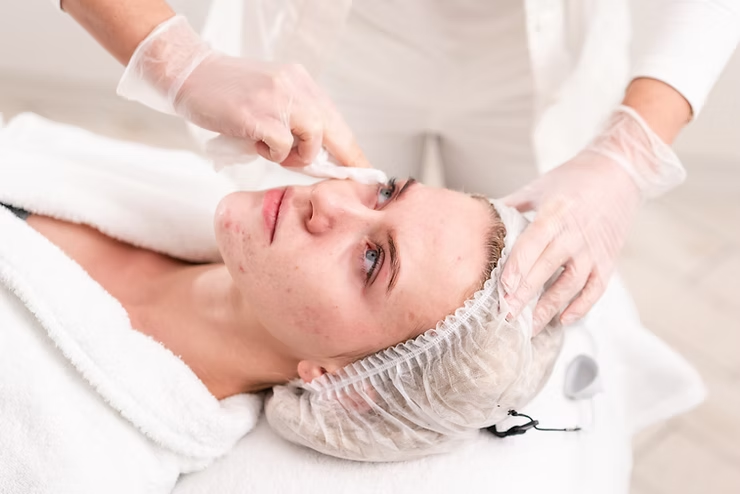
Some skin concerns are easy to understand. A breakout appears, then heals. A dry patch shows up, then disappears once your routine improves. Pigmentation rarely behaves that neatly. One month your skin looks brighter and more even, and the next, those same shadows seem to return around your cheeks, forehead, or upper lip as if they never really left. That is what makes dark spots so frustrating. They do not just affect how your skin looks on one particular day. They create the feeling that you are always managing the same problem, no matter how many products you buy or how careful you try to be.
The truth is, recurring pigmentation is not usually a sign that your skin is “failing” or that you simply have not found the right serum yet. In many cases, it is because pigmentation is not a single issue with a single cause. Sun exposure, heat, inflammation, hormones, skin barrier damage, and even the wrong treatment approach can all play a role in why pigment fades, then slowly reappears. Conditions such as melasma are especially known for this cycle, and sun exposure remains one of the biggest triggers for ongoing pigment activity.
That is also why a more thoughtful treatment plan tends to work better than chasing one quick fix after another. For many people, the goal is not simply to remove what is visible today, but to understand why it formed in the first place and how to reduce the chance of it coming back. This is where professional treatment starts to make a real difference. A carefully planned approach to pigmentation removal laser in Canberra can target excess melanin more precisely while also taking your skin type, pigment depth, and long-term triggers into account.
Pigmentation Is More Complicated Than It Looks
When people say they have “dark spots”, they are often describing very different things. One person may be dealing with sunspots that built up over years of UV exposure. Another may have post-inflammatory hyperpigmentation left behind after acne. Someone else may be experiencing melasma, which tends to sit in broader patches and can be strongly influenced by hormones, heat, and light. These conditions do not behave the same way, and they should not be treated as if they do. DermNet and the American Academy of Dermatology both note that pigmentation disorders vary in cause, depth, and response to treatment, which is why an accurate diagnosis matters before choosing a treatment plan.
That difference matters because many people judge treatment success too early and too simply. If a spot looks lighter for a while, they assume the problem is solved. But pigment is not always gone just because it has faded on the surface. Sometimes it has only been partially reduced. Sometimes the underlying trigger is still active. Sometimes the skin has been irritated, which can make pigment rebound. And sometimes the concern was misidentified from the beginning.
A better way to think about pigmentation is to see it as a behaviour pattern rather than a stain. Your skin is producing melanin for a reason. Until that reason is better understood and managed, recurrence is always possible.
Why Dark Spots So Often Come Back

Most people do not get recurring pigmentation because they are careless. They get recurring pigmentation because everyday triggers are easy to underestimate. You do not need to spend hours at the beach to stimulate pigment. Brief, repeated exposure while driving, walking outside, sitting near windows, or running errands can all add up. In Australia, UV levels are often strong enough to damage unprotected skin when the UV Index is 3 or above, and the Cancer Council notes that UV can remain high even on cool or cloudy days.
There are also other reasons pigment keeps resurfacing, including:
- Daily UV exposure: even small amounts of repeated sun exposure can restimulate melanin production
- Hormonal influence: melasma is commonly associated with hormonal changes and can be difficult to keep stable
- Inflammation: acne, skin picking, harsh exfoliation, and overuse of actives can all leave lingering marks
- Heat and irritation: for some people, heat alone can worsen pigment, especially when melasma is involved
- Weak barrier function: when skin stays inflamed or sensitised, it becomes easier for dark marks to persist
This is why recurring pigmentation often feels so personal. It is not just about what happened last week. It is about what your skin has been responding to for months or even years.
When Skincare Helps — And When It Stops Being Enough
A good routine absolutely matters. Gentle cleansing, barrier support, daily sunscreen, and carefully selected active ingredients can all help stabilise the skin and support brighter tone over time. But there is a difference between support and correction. Once pigment becomes established, especially when it sits deeper in the skin or keeps returning in the same areas, home care usually has limits.
That does not mean skincare is useless. Far from it. In fact, the right skincare often makes in-clinic treatment more effective. It can calm inflammation, reduce irritation, and support maintenance between sessions. The problem is when people expect a topical routine to solve everything on its own. That expectation often leads to frustration, over-exfoliation, and a cycle of trying stronger and stronger products that leave the skin more reactive than before.
A more realistic view is this: skincare helps create better conditions, but it does not always remove established pigment efficiently. When the goal is clearer, more even skin rather than temporary surface brightening, professional treatment is often the next logical step.
How Pigmentation Removal Laser in Canberra May Help
The biggest advantage of laser is precision. Rather than relying on ingredients to gradually influence skin behaviour from the surface, laser technology is designed to target pigment more directly. According to DermNet, several laser types are used in dermatology for pigmented lesions because laser energy can selectively target melanin while aiming to preserve surrounding tissue.
In practical terms, this means a clinician can assess what type of pigmentation you have, how deep it appears to sit, how reactive your skin is, and whether laser is the right option at all. For some people, the goal is to break up visible sun damage. For others, it is to take a more conservative and carefully staged approach because the pigment is hormonal, inflammatory, or prone to rebound.
Professional laser treatment can be especially helpful when you are dealing with concerns such as:
- Sunspots and age-related sun damage
- Freckles that have become more prominent over time
- Uneven tone caused by chronic UV exposure
- Some forms of post-inflammatory hyperpigmentation
- Persistent pigment that has not responded well to topical care
The key word here is professional. Pigmentation is one of the easiest concerns to oversimplify and one of the easiest to aggravate when treated too aggressively. That is why treatment planning matters just as much as the device itself.
Not All Pigmentation Should Be Treated the Same Way
One reason many people get disappointing results is that they assume all pigment responds the same way. It does not. Some superficial sunspots respond quite well to targeted light or laser-based treatments. Melasma, on the other hand, often requires far more caution. The AAD notes that melasma can worsen with sunlight and may require ongoing protection and tailored treatment rather than a one-off intervention.
This is where a proper consultation becomes more valuable than people expect. An experienced practitioner is not simply asking what you want removed. They are trying to understand the story behind the pigment. When did it first appear? Does it flare after summer? Does it sit in small defined spots or broader patches? Is there a history of acne, skin sensitivity, pregnancy, hormonal medication, or aggressive treatments?
Those questions help shape the plan. In some cases, laser is the primary treatment. In others, skin calming, barrier repair, or a staged approach may come first. The most effective treatment is not necessarily the strongest one. It is the one that matches the behaviour of your skin.
What a Better Treatment Strategy Usually Includes
People often imagine laser as a single dramatic appointment that solves everything. In reality, better outcomes usually come from a more measured plan. Pigment develops over time, and clearer skin usually happens the same way. A skilled approach focuses on reducing visible pigment while lowering the triggers that make it return.
A thoughtful strategy often includes:
- Accurate assessment: identifying whether the concern is sun damage, melasma, PIH, or a combination
- Conservative settings when needed: especially important for reactive or darker skin tones
- Spacing between sessions: allowing the skin to recover properly and reducing the risk of rebound
- Barrier-supportive home care: helping the skin stay calm while results develop
- Strict sun protection: because untreated UV exposure can undo progress surprisingly quickly
This is one reason people searching for the best treatment for recurring pigmentation in Canberra are often better served by a clinic that looks at the whole picture rather than just offering a single machine-based solution.
Why Aftercare and Maintenance Matter More Than People Think
Even the most advanced treatment cannot compete with inconsistent aftercare. If you reduce pigment successfully and then go back to irregular sunscreen use, over-exfoliation, barrier irritation, or too much unprotected light exposure, you are creating the same environment that allowed the problem to return the first time. That is why maintenance is not an optional extra. It is part of the treatment.
The good news is that maintenance does not have to be complicated. It usually comes down to consistency rather than extremes. The Cancer Council’s advice on sun protection remains highly relevant here, especially in Australia’s high-UV environment, and melasma guidance from trusted dermatology sources repeatedly emphasises sun protection as a core part of long-term control.
Good maintenance usually looks like this:
- Daily broad-spectrum SPF even when it is cloudy or you are “only going out briefly”
- Reapplication when outdoors or after long periods in daylight exposure
- Gentler skincare choices rather than constantly chasing stronger acids or harsher brightening products
- Managing inflammation early if you are prone to acne, redness, or irritation
- Following your clinician’s timeline instead of over-treating between sessions
For many people, the difference between short-term improvement and long-term progress is not whether treatment worked. It is whether the skin was supported properly afterwards.
Why a Layered Approach Can Work Better Than Laser Alone
One of the more useful shifts in modern aesthetics is the idea that better skin often requires more than one type of support. Laser may help reduce visible pigment, but clearer skin is not only about removing colour. It is also about making the skin calmer, stronger, and less reactive over time.
That is why a layered plan can sometimes produce more stable results than laser alone. For example, if someone also has post-acne marks, uneven texture, inflammation, or a compromised barrier, complementary treatments may help create healthier conditions overall. On Sycamore’s own blog, their team also discusses combining modalities rather than treating every concern in isolation, which aligns with how many clinics now approach long-term skin health.
If you want to keep readers moving through the site naturally, this is a good place to include internal resources such as The Layered Skin Approach: How Sycamore Combines Laser, Microneedling and Ultherapy for Better Results, or their article on IPL treatment in Canberra, depending on whether the reader’s concern is pigment alone or a broader mix of sun damage, redness, and uneven tone.
Why Professional Assessment Matters Before Any Pigment Treatment
Not every dark spot is just a cosmetic concern. That point deserves to be said clearly. If a lesion is changing shape, size, colour, or behaviour, it should not simply be booked in as a beauty treatment. Skin changes can have different causes, and suspicious lesions should be medically assessed. The Cancer Council advises people to be alert to changes in the skin and seek assessment for concerning spots.
Beyond that safety point, professional assessment matters because pigment can be deceptively complex. A person may think they only have sunspots, but also have a melasma component. Someone else may think they need a stronger treatment, when what they really need first is skin calming and barrier repair. This is exactly why good clinics do not rush straight to treatment without asking detailed questions.
At Sycamore Medi Spa, the brand positions itself around personalised assessment, evidence-based protocols, and long-term skin health, and the clinic has been serving Canberra clients since 2015. Their website also notes two local clinic locations and a consultation-led approach to treatment planning.
What to Read and Do Before Booking
If someone is still in the research stage, a helpful blog does not pressure them too early. It helps them make a better decision. That means encouraging them to understand their pigment pattern, reflect on what they have already tried, and choose a clinic that treats the skin as an individual case rather than a standard package.
Before booking, it is worth thinking about:
- How long the pigmentation has been there
- Whether it worsens after summer, heat, or breakouts
- What treatments or products have already been tried
- Whether your skin is generally sensitive or easily irritated
- Whether your main goal is correction, prevention, or both
For readers who are already considering treatment, a natural next step would be to explore Sycamore’s booking page, browse the Beauty Blog & Skincare Insights section, or read more about the clinic’s philosophy on the About Us page. Those links feel relevant in context because they support the decision-making process rather than interrupt it.
Final Thoughts
Dark spots can be deeply annoying not because they are always severe, but because they are persistent. They create uncertainty. They make people wonder whether the last treatment failed, whether the next product will be the answer, or whether they are somehow doing everything wrong. Usually, none of those assumptions is quite right. Pigmentation comes back because the skin is responding to triggers that have not yet been fully addressed, or because the original treatment plan was too general for a problem that is actually quite specific.
That is why a smarter approach tends to be more reassuring than a more aggressive one. Once you understand whether you are dealing with sun damage, melasma, post-inflammatory pigment, or a combination of concerns, the path forward becomes clearer. For many people, pigmentation removal laser in Canberra may help because it offers a more precise way to treat visible pigment while still allowing room for skin type, sensitivity, and long-term maintenance to shape the plan.
And that is really the point. Better skin is rarely about doing the most. It is about doing the right things in the right order, with enough patience to let the skin respond well. When that happens, clearer skin stops feeling like a temporary win and starts feeling like something more stable, realistic, and worth building on.