Can Ultherapy PRIME Help With a Sagging Neck?
You might first notice it in a photo taken from the side. Your neck looks a little softer than it used to, or the skin beneath your chin no longer follows quite the same outline. Perhaps you have started paying more attention to the area when applying skincare, only to realise that your usual moisturiser is not changing the way the skin sits.
If you are researching neck tightening in Canberra, you may have come across Ultherapy PRIME. It is a non-invasive ultrasound treatment offered by Sycamore Medi Spa for lifting the skin on the neck, under the chin and on the brow. The clinic also lists improvement of lines and wrinkles on the décolletage among its treatment indications. You can read more about the service on Sycamore’s Ultherapy PRIME treatment page.
The important question is not simply whether Ultherapy PRIME can treat the neck. It is what is making your neck look different, how much change you hope to see, and whether ultrasound lifting is suited to that concern. A neck that has started to lose firmness is not necessarily the same as a neck with more substantial excess skin, and neither should be treated as though the answer is automatic.
Why Does the Neck Start Looking Less Firm?
The neck can become a noticeable area of change because its appearance depends on several things working together: the skin, the tissues beneath it, the contour under the chin and the natural shape of the jaw and neck. As skin loses some of its elasticity over time, it may not sit as firmly as it once did. Changes in tissue distribution and anatomy can also influence the outline you see in the mirror.
This helps explain why two people can both describe their concern as a “sagging neck” while looking for very different results. One person may have mild looseness beneath the chin and want a slightly firmer-looking contour. Another may be concerned about prominent vertical neck bands. Someone else may have substantial excess skin and hope to remove the folds entirely.
Those concerns are not interchangeable. Ultherapy PRIME is a skin-lifting treatment, not a procedure that removes excess skin or changes the underlying anatomy of the neck. Sycamore describes it as an option for people experiencing some degree of skin laxity or loss of elasticity, while making clear that it does not duplicate the results of a surgical facelift. That distinction is especially important when your main concern is the neck, where the amount and cause of visible looseness can vary considerably.
If you are unsure how to describe what bothers you, try identifying the exact area rather than using the broad phrase “neck ageing”. Is the skin directly beneath your chin softer? Does the front of your neck look less firm? Are you more concerned about the transition between your jawline and neck? A consultation can then focus on the feature you actually want to address.
How Does Ultherapy PRIME Work on the Neck?
Ultherapy PRIME uses focused ultrasound energy to deliver treatment beneath the skin’s surface. The energy creates controlled points of heating at selected tissue depths, stimulating a collagen response that develops over time. Collagen is one of the proteins involved in the skin’s structure and firmness, so the treatment aims to encourage a gradual lifting effect rather than create an immediate, surgical-style change.
A defining feature of Ultherapy PRIME Canberra is its real-time ultrasound imaging. This allows the practitioner to visualise tissue layers while planning and delivering treatment. The imaging does not make every neck suitable for Ultherapy, and it does not guarantee a particular result. Its role is to help the practitioner see the relevant tissue and personalise treatment delivery.
A published review of microfocused ultrasound with visualisation explains that the technology is used for non-invasive lifting of areas including the tissue beneath the chin and the neck. It also describes how real-time ultrasound imaging helps practitioners view tissue layers and confirm an appropriate treatment depth. This is an important distinction when researching Ultherapy PRIME Canberra: imaging supports treatment planning, but it does not remove the need for an individual assessment or guarantee a particular lifting result. For a closer look at the clinical discussion, see the peer-reviewed review of microfocused ultrasound with visualisation.
Sycamore explains the technology and its intended lifting areas on its Ultherapy PRIME treatment page. If you have read about ultrasound skin tightening before, this is a useful detail to discuss at your appointment: the treatment is not simply a handpiece moving over the neck. The practitioner must assess the area, determine whether treatment is appropriate and select a plan suited to the individual anatomy.
The gradual collagen response also changes how you should think about the appointment. Ultherapy PRIME is not intended to pull the neck into a new position the moment you leave the clinic. The treatment takes place on one day, but any visible improvement develops afterwards.
The Difference Between Loose Neck Skin and Fullness Under the Chin
One of the most useful questions to ask before booking is whether your concern is primarily skin laxity or fullness beneath the chin. They can appear together, but they are not the same thing.
Imagine looking at your side profile and noticing that the area below your jaw seems less defined. You might describe it as loose skin because that is the easiest way to explain what you see. However, the contour could be influenced by skin laxity, fat distribution, your natural anatomy or a combination of factors. An ultrasound lifting treatment should not be expected to correct every possible cause of a softer profile.
Ultherapy PRIME is specifically cleared for lifting skin under the chin and on the neck, but that does not mean it is a general-purpose treatment for every type of submental fullness. If your main expectation is a substantial reduction in volume, you need to discuss that expectation directly rather than assuming that skin tightening and volume reduction are identical goals.
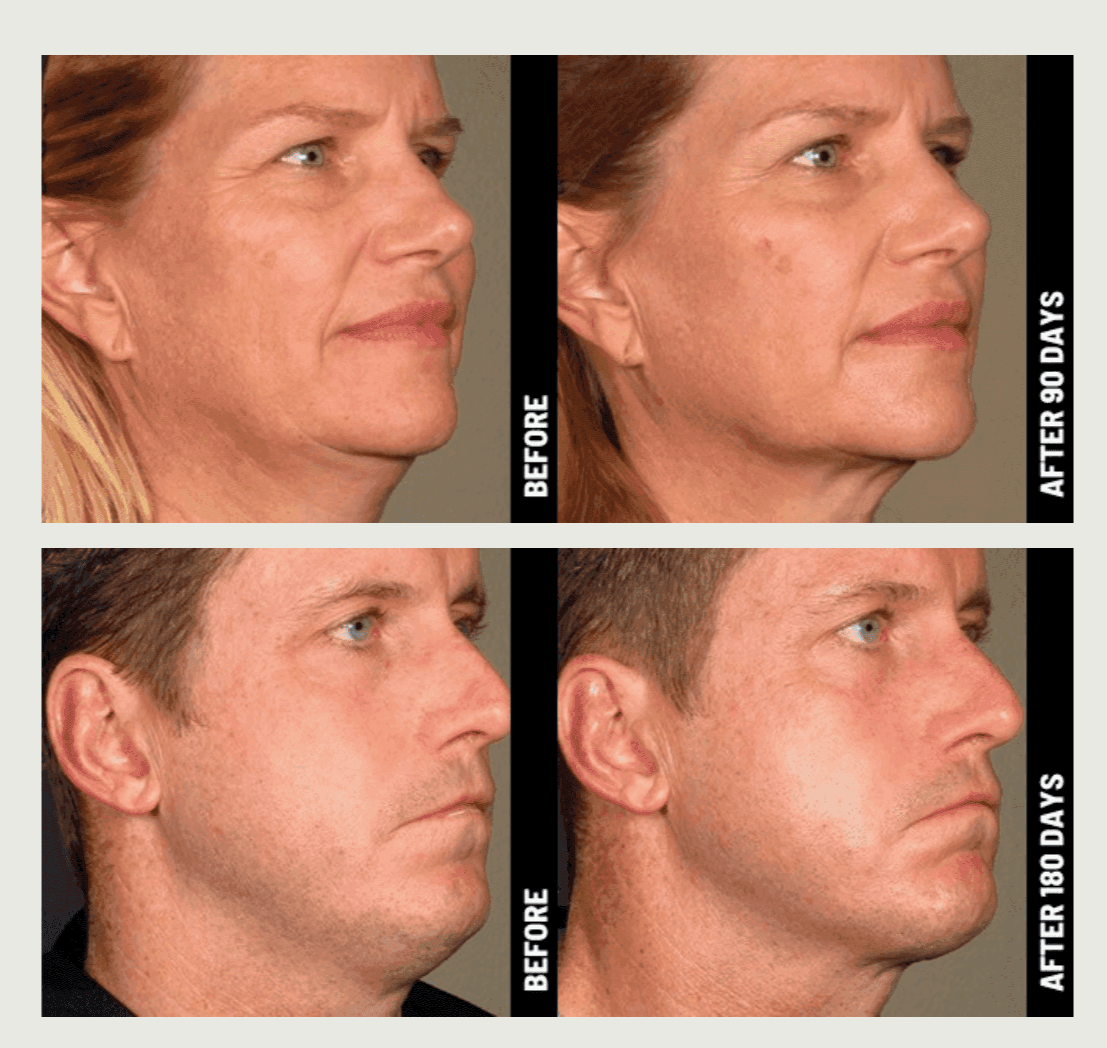
This is where a consultation becomes more valuable than comparing yourself with someone else’s before-and-after photograph. Their neck may have looked similar to yours at first glance, yet the underlying concern could be different. Their result also cannot establish what your own result will be.
Sycamore’s broader discussion of non-surgical lifting explains why treatment selection should begin with the nature of the concern rather than the treatment name alone. Its guide to Ultherapy for skin tightening in Canberra offers additional context if you are trying to understand where ultrasound lifting fits into a personalised plan.
Why Your Neck Can Look Different in Photos and Mirrors
If you first became concerned about your neck after seeing a photograph, it is worth considering how much the viewing angle affects what you notice. Looking down at a phone, leaning towards a laptop or holding your chin close to your chest can temporarily create folds beneath the jaw, even when the skin looks smoother in a neutral position. A photograph taken from below may also emphasise fullness under the chin, while overhead lighting can make lines and shadows more noticeable. These changes in appearance do not necessarily mean that your neck has suddenly become looser. Before researching Ultherapy PRIME Canberra, try identifying whether your concern is consistently visible when your head is in a comfortable, neutral position or whether it appears mainly in particular photographs. This will help you describe the issue more accurately during a consultation. [Sycamore’s Ultherapy PRIME treatment information] (https://www.sycamoremedispa.com.au/treatments/ultherapy-prime) explains that the treatment is intended for lifting skin in areas including the neck and under the chin, but a photograph alone cannot establish whether skin laxity is the main reason for a softer-looking contour.
It can also help to explain when you started noticing the change and whether your concern is about the front of the neck, the area directly beneath the chin or the transition from your jawline to your neck. These details give the practitioner a clearer picture of what you hope to improve. If you are considering treatment because you dislike one particular camera angle, ask what a realistic result would look like in everyday positions rather than expecting every fold to disappear whenever you move your head. The goal of a neck tightening consultation should be to assess a genuine skin concern, not to promise that your neck will look identical from every angle. A realistic discussion of posture, anatomy and visible skin laxity can help you decide whether Ultherapy PRIME is relevant to the change you have noticed.

What Kind of Neck Changes Might Be Worth Discussing?
You do not need to arrive at a consultation with a technical diagnosis. It is enough to explain what has changed and what you hope might improve. For example, you may have noticed early looseness at the front of the neck, a softer-looking area directly beneath the chin or a less defined transition between the jaw and neck.
Those observations can provide a starting point for discussing Ultherapy PRIME because the treatment is intended to lift skin in the neck and under-chin areas. They are not, however, a checklist that guarantees suitability. The practitioner still needs to assess the skin, relevant anatomy, treatment history and expectations.
It is equally useful to explain what you do not want. Perhaps you are not looking for a dramatic transformation and would be satisfied with a modest improvement in firmness. Perhaps you have an important event approaching and need to understand whether the expected timeline fits your plans. Or perhaps you have seen photographs online that suggest a much larger change than a non-invasive treatment can realistically provide.
The more specific you are, the easier it becomes to discuss whether the treatment’s likely scope matches your goal. A good consultation should leave room for the possibility that Ultherapy PRIME is not the right answer for every neck concern.
Why Neck Results Take Time
A common misunderstanding about non-surgical lifting is that the result should be obvious as soon as the treatment ends. With Ultherapy PRIME, the intended lifting effect is associated with the body’s collagen response, so changes generally develop gradually over the following months.
This means that checking your neck in the mirror every morning is unlikely to be a useful way to judge progress. Small changes in posture, lighting, camera angle and even how you hold your chin can make the neck appear different from one photograph to the next. If you want to follow your results, ask the clinic how it documents treatment progress and when an appropriate review might take place.
Sycamore describes Ultherapy PRIME as a treatment with gradually developing, potentially long-lasting results, but individual outcomes and duration vary. Its Ultherapy PRIME treatment information provides an overview of the technology and expected treatment experience.
The practical takeaway is to plan around the treatment’s timeline rather than expecting a last-minute change. If you are considering neck tightening before a wedding, holiday or other event, ask about timing well in advance. An appointment shortly before the occasion should not be booked on the assumption that your final result will already be visible.
The American Academy of Dermatology explains that ultrasound skin tightening works by delivering heat beneath the skin to encourage collagen production. It notes that people may see modest lifting and tightening over approximately two to six months, although individual results vary. This supports a realistic approach to Ultherapy PRIME: rather than expecting your neck to look dramatically different immediately after treatment, discuss the likely timeline and degree of change with your practitioner. You can read the American Academy of Dermatology’s guide to non-invasive skin tightening for more information about how ultrasound treatments work and what they may achieve.
How to Track Neck Tightening Results Without Expecting Daily Changes
Because Ultherapy PRIME works through a gradual collagen response, judging the treatment by how your neck looks the next morning can lead to unnecessary confusion. Your neck may appear slightly different from day to day because of lighting, posture and temporary post-treatment reactions. If you want to understand whether your treatment has made a visible difference, ask the clinic when it recommends reviewing your results and whether it takes photographs as part of that process. Consistent photographs can be more useful than comparing an old holiday picture with a new selfie taken from a completely different angle. Try to keep the head position, camera distance and lighting similar when looking at changes over time. Sycamore’s Ultherapy PRIME treatment page describes the treatment’s gradual results, making it important to allow time for the intended response rather than expecting an immediate transformation.
It is equally important to decide what a meaningful improvement would look like for you. Perhaps you would be pleased if the skin beneath your chin appeared somewhat firmer, or if the transition between your jawline and neck looked more defined in a neutral position. Those are more specific goals than expecting your neck to look “ten years younger”. Before treatment, discuss your priorities with the practitioner and ask which changes are realistic for your anatomy. You should also ask what to do if you are uncertain about your progress or notice an unexpected reaction during recovery. A useful results review is not about searching for a dramatic difference in every photograph; it is about assessing whether the treatment has produced a change that matches the goals discussed at your consultation. This approach keeps expectations grounded while giving you a clearer way to evaluate your neck tightening journey.
Can Ultherapy PRIME Replace a Neck Lift?
No non-invasive treatment should be presented as a direct replacement for surgery. Ultherapy PRIME and a surgical neck lift involve different procedures and can produce different degrees of change.
Ultherapy PRIME delivers focused ultrasound energy without surgical incisions. It is intended to stimulate a lifting response in selected areas of skin. A surgical procedure may address concerns that cannot be corrected to the same extent with non-invasive treatment, including more substantial excess skin. The appropriate discussion depends on the person’s anatomy, goals and willingness to consider different treatment approaches.
Sycamore states on its Ultherapy PRIME page that the treatment will not duplicate the results of a surgical facelift. That is a useful expectation to carry into any conversation about the neck. If you want a subtle change and are exploring a non-surgical approach, Ultherapy PRIME may be relevant to discuss. If you want substantial excess skin removed, a consultation should address whether your goal falls outside what ultrasound lifting can reasonably achieve.
The point is not to decide that one approach is universally preferable. It is to avoid comparing two very different procedures as though they promise the same outcome.
What Happens During a Neck Treatment Appointment?
A neck-focused Ultherapy PRIME appointment should begin with an assessment of your concerns and suitability. Tell the practitioner about relevant medical conditions, previous aesthetic procedures, any implanted devices and anything unusual you have noticed in the treatment area. You should also disclose recent treatments around the face or neck rather than assuming they are unrelated.
During treatment, the practitioner uses the ultrasound system to visualise tissue and deliver energy according to the treatment plan. You may feel brief sensations of heat, tingling or discomfort as energy is delivered. The experience varies between individuals and treatment areas, so it is worth asking how the clinic approaches comfort and what you should do if a particular area feels difficult to tolerate.
Sycamore states that Ultherapy PRIME treatment time can vary according to the areas being treated. Its treatment page gives a general appointment range of approximately 30 to 90 minutes. A neck-only appointment and a broader face-and-neck plan should not be assumed to take the same amount of time.
Afterwards, many people can return to normal activities without a prolonged recovery period, but “no downtime” should not be interpreted as “no possible after-effects”. Temporary redness, swelling, tenderness or other reactions can occur. Ask for the clinic’s current aftercare instructions and follow them rather than relying on someone else’s online account of their appointment.
Planning Neck Tightening as Canberra Approaches Summer
With Canberra moving towards warmer weather, it is natural to think about treatments before summer holidays, outdoor gatherings or end-of-year events. You may also be wearing clothing that leaves your neck and upper chest more exposed, making the area more noticeable to you than it was during winter.
However, the season should influence how you plan a treatment, not create pressure to book one. If you are considering Ultherapy PRIME before an event, remember that its intended results develop gradually. A September or October consultation may be a more useful starting point for discussing your goals and timeline than waiting until the week before a December occasion and expecting an immediate lift.
Summer planning also means being realistic about sun exposure. A neck treatment does not protect the skin against ultraviolet radiation, and a firmer-looking neck is not evidence that sun protection is less important. Cancer Council Australia recommends using sun protection when the UV Index is 3 or above, including appropriate sunscreen, protective clothing and shade. Its guidance is available at Cancer Council Australia’s sun-safety page.
If you have a beach holiday, outdoor sport or another activity planned near your appointment, tell the practitioner. Ask whether the timing is appropriate and what skincare or activity guidance applies afterwards. These practical details are part of choosing a treatment that fits your life rather than trying to fit your life around a rushed booking.
What If Your Neck Concern Is Mostly Skin Texture?
Not every change in the neck is a lifting concern. You might be bothered by fine surface lines, uneven texture, dryness or visible pigmentation rather than the position of the skin itself. Those issues can coexist with laxity, but they should not automatically be treated as the same problem.
Ultherapy PRIME has specific intended treatment areas and indications. Its neck indication concerns lifting the skin; its separate décolletage indication concerns improving lines and wrinkles in that area. It would be misleading to assume that a neck-lifting treatment will remove every visible line, dark spot or textural change.
If the surface of your skin is your main concern, say so during your consultation. Sycamore offers a wider range of skin rejuvenation services, which you can explore through its treatment menu. That does not mean you need multiple procedures. It means the discussion should identify the actual concern before assigning a treatment to it.
The same applies if you notice a new or changing pigmented spot on your neck. A cosmetic lifting consultation is not a substitute for appropriate medical assessment of a suspicious skin lesion.
Questions Worth Asking Before You Book
By the time you have researched Ultherapy PRIME Canberra, you may already understand the basic idea of ultrasound lifting. What you still need is information about your own neck.
Ask the practitioner to explain what appears to be contributing to your concern and which area they would propose treating. Ask what degree of improvement is realistic for you, when it might become noticeable and how results will be reviewed. If your concern extends from the neck to the underside of the chin or jawline, clarify which areas are included in the proposed plan.
You should also discuss discomfort, possible side effects, relevant contraindications and any previous procedures. If you are comparing treatment quotes, confirm the proposed areas and scope rather than assuming that every appointment labelled “neck tightening” includes the same treatment plan.
Sycamore’s Ultherapy PRIME treatment page is a useful starting point, but the page cannot assess your anatomy or promise your individual result. That is the role of a proper consultation.
A More Useful Way to Think About Neck Tightening
If your neck has started to look less firm, Ultherapy PRIME may be a relevant non-invasive treatment to discuss—particularly when the concern involves skin laxity in the neck or under-chin area. Its focused ultrasound technology and real-time imaging support a personalised treatment approach, while the intended collagen response means that results develop over time.
But “sagging neck” is a description, not a treatment plan. Skin laxity, fullness beneath the chin, prominent bands, surface lines and substantial excess skin are different concerns. They may require different conversations, and not all can be addressed by the same device.
You can learn more about Sycamore’s Ultherapy PRIME service and its broader skin and facial treatment options before arranging an assessment.
The most useful outcome of that first conversation is a clear understanding of what Ultherapy PRIME may realistically change about your neck—and what it may not.