Why Does Facial Redness Keep Coming Back?
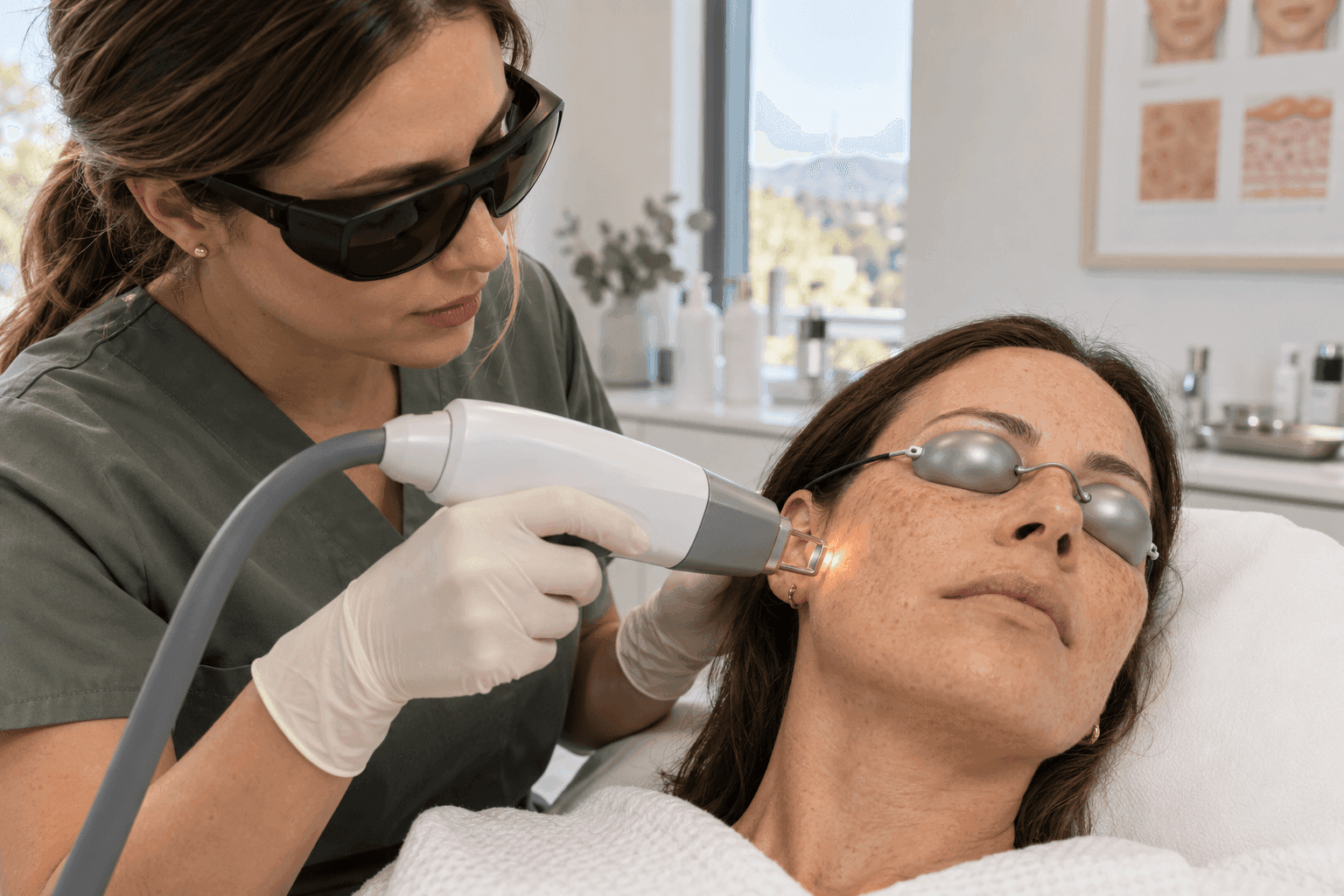
You wake up, look in the mirror and notice that your cheeks seem relatively calm. Your skin tone looks fairly even, and the redness that bothered you yesterday appears to have settled.
Then you take a hot shower, drink your morning coffee or walk outside into Canberra's afternoon sunshine.
Suddenly, your cheeks are red again.
For some people, the redness disappears within minutes. For others, it lingers for hours or gradually becomes a more persistent feature of their complexion.
If this sounds familiar, you may have started searching for facial redness treatment in Canberra, wondering whether your skin is simply sensitive or whether something more specific is happening.
One possibility is rosacea, a chronic inflammatory skin condition that commonly affects the central face. However, not every red face is caused by rosacea. Irritation, contact dermatitis, acne-related inflammation, sun exposure and other skin conditions can also contribute to facial redness.
This distinction matters because treating visible redness without understanding its cause may not address why it keeps returning.
At Sycamore Medi Spa, Rosacea and Redness is included within the clinic's Targeted Skin Treatment range. The clinic also offers Dynamic Pulsed Light (DPL) within its Skin Rejuvenation category.
These services create opportunities to discuss redness-related concerns, but they should not be interpreted as universal solutions for every type of facial flushing.
The first step is understanding what your skin is actually telling you.
Why Does Facial Redness Come and Go?
Facial redness can develop for several reasons, and its appearance may change throughout the day.
One important process is the widening of small blood vessels near the skin's surface. When these vessels dilate, more blood flows through the area, making the skin appear redder.
This process can occur naturally in response to heat, exercise, emotional changes and other everyday situations.
For many people, temporary flushing is normal.
However, some individuals experience flushing more frequently, more intensely or for longer periods than expected.
Others notice that the redness gradually becomes more persistent, even when they are not exercising or feeling warm.
This pattern may occur in rosacea, although a proper diagnosis requires assessment by an appropriately qualified healthcare professional.
DermNet, a dermatology education resource, explains that rosacea can involve persistent centrofacial redness, flushing, inflammatory lesions and visible blood vessels.
You can explore its clinical overview through DermNet's rosacea information.
The important point is that redness is a visible sign, not a complete diagnosis.
Two people may have similar-looking red cheeks but require different approaches because the underlying causes are different.
What Is Rosacea?
Rosacea is a chronic inflammatory condition that commonly affects the central face, particularly the cheeks, nose, forehead and chin.
Its presentation varies between individuals.
Some people primarily experience repeated flushing. Others develop persistent background redness, visible small blood vessels or acne-like inflammatory bumps.
Certain individuals also experience burning, stinging or increased skin sensitivity.
Rosacea can sometimes affect the eyes, causing symptoms such as irritation, dryness or redness. Eye symptoms deserve medical assessment, particularly if they involve pain, light sensitivity or changes in vision.
The condition is not simply a matter of having delicate skin.
Rosacea involves a complex combination of inflammatory, vascular and other biological processes. The exact mechanisms are not fully understood, and triggers vary between individuals.
This is why there is no single skincare product or cosmetic treatment that permanently eliminates rosacea for everyone.
Management may involve identifying triggers, adjusting skincare, using prescribed medication and considering appropriate procedures for persistent vascular redness.
The American Academy of Dermatology provides an overview of rosacea symptoms and treatment approaches through its rosacea resource.
For people considering professional redness treatment, this distinction is particularly important.
A treatment that improves the appearance of visible blood vessels does not necessarily control every inflammatory or flushing-related aspect of rosacea.
Is It Rosacea or Just Sensitive Skin?
The terms *rosacea* and *sensitive skin* are often used interchangeably, but they do not mean exactly the same thing.
Sensitive skin is a broad description of how the skin reacts.
Someone may describe their skin as sensitive because certain products cause stinging, fragrances trigger irritation or their face becomes uncomfortable after cleansing.
Rosacea is a specific inflammatory skin condition.
Although people with rosacea frequently experience sensitivity, not everyone with sensitive skin has rosacea.
For example, a person who develops redness after introducing a strong exfoliating acid may be experiencing irritation rather than rosacea.
Someone whose cheeks become red after applying a fragranced moisturiser may have contact dermatitis or another reaction.
Meanwhile, a person who repeatedly flushes after heat exposure and has persistent central facial redness may need assessment for rosacea.
The distinction matters because applying increasingly strong cosmetic treatments to already irritated skin can make the situation worse.
If your redness appeared suddenly after changing skincare products, the most appropriate first step may be to stop the suspected irritant and seek advice rather than immediately booking an energy-based procedure.
If redness is persistent, recurrent or accompanied by other symptoms, medical assessment can help clarify the cause.
Why Canberra's Weather Can Make Redness More Noticeable
Canberra's climate creates some practical challenges for people who experience facial flushing.
During spring and summer, the transition between cool mornings, warmer afternoons and indoor environments can expose the skin to noticeable temperature changes.
You may leave a cool house, walk outside in bright sunshine and then enter a heated or air-conditioned workplace.
Later, you might exercise outdoors, take a hot shower or spend the evening in a warm restaurant.
For someone prone to flushing, these environmental changes can contribute to repeated episodes of redness.
Heat and temperature changes are commonly reported rosacea triggers, although individual responses vary.
Importantly, Canberra's climate does not mean everyone with rosacea will react in the same way.
One person may find hot weather particularly challenging, while another notices more redness during cold, windy conditions.
Some people may react to both.
Rather than assuming that every episode has the same trigger, it can be useful to observe when redness appears.
Does it happen after exercise? After a hot shower? When moving between different temperatures? Or after using particular skincare products?
Understanding these patterns may help you make practical adjustments without unnecessarily avoiding every outdoor activity.
Why Your Skincare Products May Be Making Redness Worse
When your face becomes red, it is tempting to assume that your skin needs a stronger treatment.
Perhaps you try an exfoliating toner to remove roughness, introduce a high-strength serum or switch to a cleanser marketed for deep purification.
But redness-prone skin does not always benefit from a more intensive routine.
For people with rosacea, certain skincare ingredients and product formulations may cause stinging, burning or irritation. Frequent exfoliation, abrasive cleansing and the repeated introduction of new products can also make it difficult to identify what is triggering a reaction.
The American Academy of Dermatology recommends a gentle skincare approach for rosacea-prone skin, including mild cleansing, moisturisation and careful product selection. Its rosacea skincare recommendations explain why fragrance, certain irritating ingredients and physical scrubbing may be problematic.
This does not mean everyone with redness must avoid all active skincare forever.
It means the routine should match the current condition of the skin.
If your cheeks sting when you apply moisturiser, your skin feels unusually hot after cleansing or redness has become more noticeable since introducing a new product, it may be worth reviewing your routine before adding another cosmetic procedure.
A professional treatment plan works best when everyday skincare supports the skin rather than repeatedly irritating it.
When Does Facial Redness Need Professional Treatment?
Not every episode of flushing requires a cosmetic procedure.
Temporary redness after exercise, embarrassment or exposure to warmth can occur without an underlying skin disorder.
However, persistent redness, increasingly frequent flushing, visible blood vessels or recurring inflammatory bumps may justify further assessment.
The first priority is identifying whether the redness is associated with rosacea or another condition.
At Sycamore Medi Spa, Rosacea and Redness is a dedicated service within the clinic's Targeted Skin Treatment category.
You can explore Sycamore's Rosacea and Redness treatment page for information about its approach.
Sycamore describes the service as focusing on persistent facial redness, visible blood vessels and inflammation-related concerns.
Its treatment information discusses Harmony Dye-SR technology, which uses filtered light within a selected wavelength range. The clinic describes the technology in relation to pigmentary and vascular targets, including haemoglobin and melanin.
This is an important distinction because the treatment is not simply another general facial.
It involves light-based technology that requires appropriate assessment of the skin concern and treatment suitability.
The clinic's service description should also not be interpreted as a substitute for medical diagnosis. If rosacea is suspected, assessment by a GP or dermatologist may be appropriate, particularly where symptoms are persistent, severe or accompanied by eye involvement.
How Can Light-Based Treatments Help Visible Redness?
One reason light-based technologies are used in aesthetic dermatology is their ability to interact with specific targets within the skin.
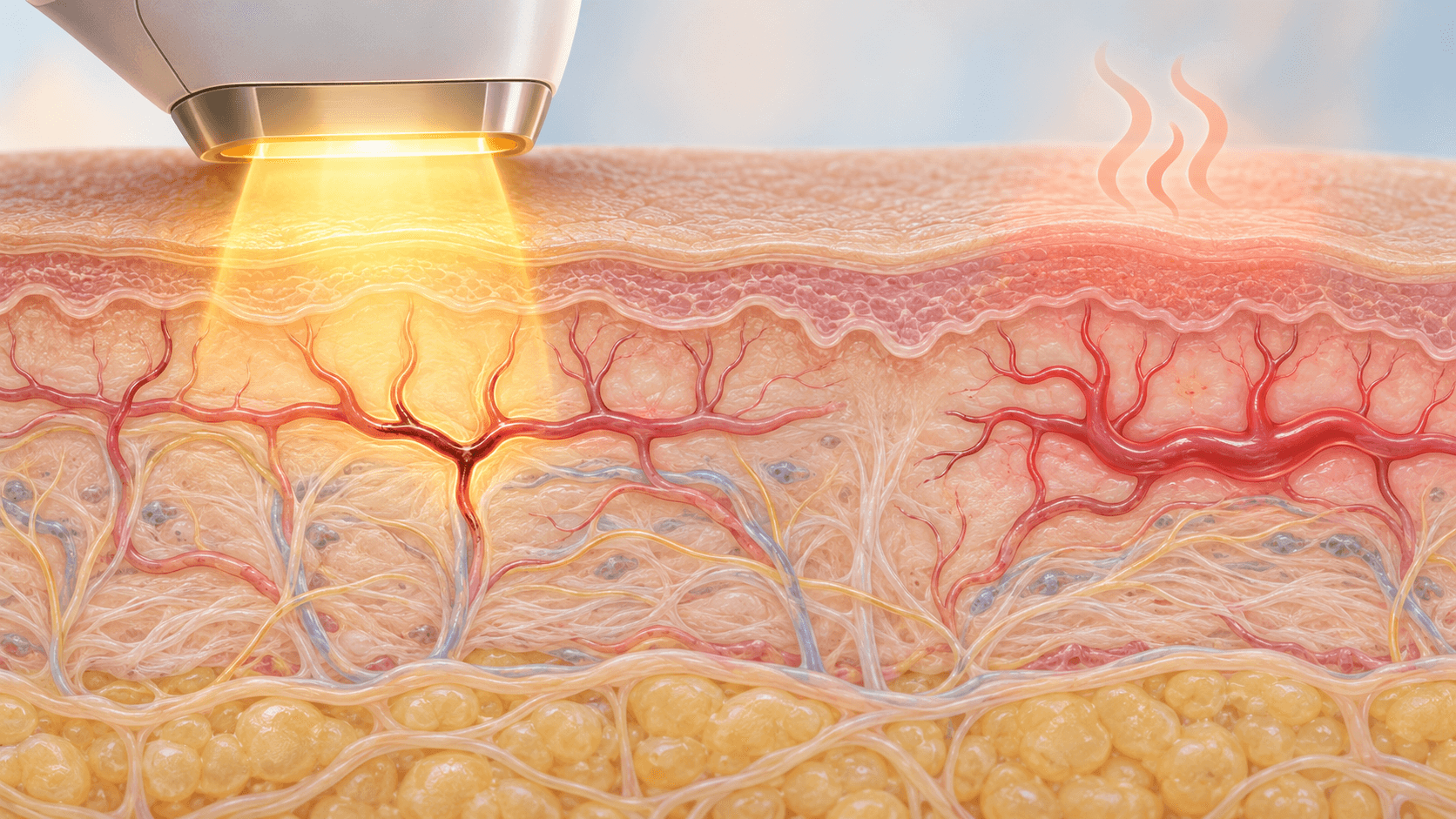
In the case of vascular redness, haemoglobin within blood vessels can absorb certain wavelengths of light.
Under appropriate treatment conditions, this can produce controlled thermal effects that may reduce the appearance of selected superficial vessels.
However, the effectiveness and safety of treatment depend on several factors, including the device, wavelength range, treatment settings, skin type and nature of the vascular concern.
Not every type of facial redness is caused by visible superficial vessels.
For example, redness caused by active irritation or contact dermatitis requires a different approach from persistent vascular redness.
The American Academy of Dermatology explains that laser and light treatments may be included in rosacea management, particularly when visible blood vessels or persistent redness are concerns.
Its guide, Lasers and Lights: How Well Do They Treat Rosacea? , discusses the potential benefits, limitations and possible side effects of these procedures.
Importantly, the AAD also notes that laser or light treatment is unlikely to be the only component of a rosacea management plan.
That is a useful expectation for anyone considering professional redness treatment.
Improving the appearance of visible redness is not necessarily the same as eliminating the underlying tendency to flush.
Where Does DPL Fit Into Redness Treatment?
Sycamore also offers Dynamic Pulsed Light (DPL) within its Skin Rejuvenation category.
DPL is part of the clinic's Harmony XL PRO treatment offering, which includes light-based applications for several skin concerns.
Sycamore's DPL treatment page includes examples involving vascular lesions as well as pigmentation-related concerns.
This makes DPL relevant to the broader discussion of redness and uneven skin tone.
However, it is important not to assume that DPL and Sycamore's dedicated Rosacea and Redness service are identical.
The Rosacea and Redness page specifically discusses Harmony Dye-SR technology, while the DPL page presents a broader skin rejuvenation service within the Harmony XL PRO platform.
The clinic's descriptions establish that both belong to its light-based treatment offering, but they do not establish that every client with rosacea should receive the same protocol.
If your main concern is persistent facial redness, it is reasonable to ask which technology is being considered and why.
If your concern includes both pigmentation and visible redness, the treatment conversation may become more complex.
Sycamore explores the differences between light-based technologies in its existing article IPL vs DPL Canberra: Which Skin Rejuvenation Treatment Is Right for You?.
That article provides additional context about why two treatments that use light energy may still have different applications.
For redness-prone skin, the objective should be selecting an appropriate treatment based on the underlying concern—not choosing a device simply because its name sounds more advanced.
Why Redness Can Return After a Successful Treatment
Imagine that someone receives professional treatment for visible facial blood vessels and notices an improvement in their complexion.
Several months later, however, their cheeks begin flushing again.
Does that automatically mean the treatment failed?
Not necessarily.
Rosacea is a chronic condition, and different aspects of the condition may respond differently to treatment.
Light-based procedures may improve selected visible blood vessels, but they do not permanently eliminate every biological process involved in rosacea.
New vascular changes can develop over time, and triggers may continue to produce flushing.
The American Academy of Dermatology's laser and light treatment guidance explains that treated vessels may remain improved for an extended period, but new vessels can develop and additional treatment may eventually be needed.
This is why long-term management matters.
Someone who continues to experience frequent heat-related flushing may benefit from identifying and managing triggers even after the appearance of persistent redness improves.
Likewise, someone with inflammatory rosacea may require medical treatment in addition to cosmetic procedures.
A successful treatment plan should therefore be evaluated according to realistic goals.
Reducing the appearance of visible vessels, improving comfort and decreasing the frequency of flare-ups are related but distinct objectives.
The Difference Between Persistent Redness and Sudden Flushing
Another useful distinction is whether the redness remains visible throughout the day or appears mainly during particular situations.
Persistent redness refers to colour that remains noticeable even when the skin is relatively calm.
Flushing describes episodes in which the face suddenly becomes redder, often in response to a trigger.
A person may experience one or both.
For example, someone might have a faint background redness across the cheeks that becomes much more noticeable after exercise.
Another person may have relatively even-looking skin most of the time but experience intense flushing after exposure to heat.
These patterns can influence treatment planning.
A procedure aimed at reducing visible vessels may help certain aspects of persistent redness, but it may not completely prevent future flushing episodes.
This is one reason the AAD recommends identifying individual rosacea triggers as part of management.
Its guidance on finding rosacea triggers discusses common factors including sunlight, heat, stress, alcohol and spicy foods.
The important word is *individual*.
Not everyone reacts to the same triggers.
Rather than eliminating every possible trigger from your life, it is more practical to identify the factors that consistently affect your own skin.
Why Sunscreen Matters Even When You Are Treating Redness
Sun protection is often discussed in relation to pigmentation, but it is also important for redness-prone skin.
Ultraviolet exposure can contribute to rosacea flare-ups in susceptible individuals.
This creates a particular challenge during Canberra's warmer months, when outdoor activities become more frequent.
Someone may be carefully managing their skincare routine but still experience repeated flushing after spending time outside.
The American Academy of Dermatology recommends daily broad-spectrum sunscreen with SPF 30 or higher for rosacea-prone skin, alongside protective clothing and shade.
Its guidance on preventing rosacea flare-ups also explains that some people may find mineral-based, fragrance-free sunscreen formulations more comfortable.
In Australia, Cancer Council recommends a combination of sun-protection measures when UV levels are 3 or above.
You can review Cancer Council Australia's sun-safety recommendations.
For people considering light-based redness treatment, this becomes especially important.
Sycamore's DPL preparation guidance advises avoiding excessive sun exposure for approximately one month before treatment.
Its aftercare instructions also emphasise sun protection and gentle skincare during recovery.
These recommendations mean that summer treatment planning should consider upcoming holidays, outdoor exercise and other activities involving substantial sun exposure.
Professional treatment may address visible redness, but daily sun protection remains part of managing the factors that can contribute to future flare-ups.
What If Your Redness Appears After Acne?
Not every red mark on the face is related to rosacea.
Sometimes the redness you notice is left behind after an inflammatory acne lesion has healed.
This is often described as post-inflammatory erythema, particularly when the residual mark appears red or pink rather than brown.
These marks are different from active acne and may also differ from the persistent background redness associated with rosacea.
The distinction matters because the treatment goal changes.
Someone with active inflammatory acne may need a plan focused on managing breakouts.
Someone with post-acne red marks may be more concerned about residual vascular colour.
Someone with rosacea may have persistent redness and flushing without the same acne-related process.
Sycamore discusses acne-related redness within its article Sun Damage, Redness & Uneven Skin: Why More People Are Choosing IPL Treatment.
That article is a useful next read if your concern involves several types of uneven skin tone rather than persistent facial flushing alone.
However, it is important not to diagnose the cause of redness from colour alone.
Redness, acne and rosacea can overlap in appearance, and professional assessment may be needed to distinguish them.
Should You Avoid Facials If You Have Rosacea?
Having redness-prone skin does not automatically mean every professional facial is unsuitable.
However, it does mean treatment selection deserves extra care.
A facial that involves strong exfoliation, significant heat, aggressive massage or multiple irritating ingredients may be uncomfortable for someone experiencing an active rosacea flare.
Likewise, a treatment that feels pleasant on normal skin may produce stinging or warmth on skin that is currently inflamed.
The question is therefore not simply whether facials are good or bad for rosacea.
It is whether the proposed procedure is appropriate for the skin's current condition.
Sycamore offers several facial services within its High Performance Facials category, alongside its more targeted treatments.
You can explore the available options through Sycamore's complete treatment range.
However, the availability of a facial does not establish that it is suitable for active rosacea.
If your skin is currently experiencing significant burning, irritation or inflammation, tell the practitioner before treatment.
A gentler approach, postponement or medical assessment may be more appropriate than proceeding with a standard facial protocol.
Why Treating Redness Too Aggressively Can Be Counterproductive
When redness becomes persistent, some people respond by trying several treatments in rapid succession.
They might use exfoliating acids, apply strong brightening products, book a facial and then consider light-based treatment within a short period.
The intention is understandable: they want the redness to disappear.
But repeatedly exposing reactive skin to new products and procedures can make it difficult to identify what is helping.
It may also increase irritation.
This is especially relevant when the skin barrier is already compromised or the underlying condition has not been identified.
For someone with rosacea, treatment planning often benefits from consistency rather than constant experimentation.
The American Academy of Dermatology's rosacea treatment guidance emphasises a combination of appropriate medical treatment, gentle skincare, trigger management and selected procedures when indicated.
That approach is more comprehensive than relying on one aggressive cosmetic intervention.
If your redness has recently become worse, it may be useful to review what has changed before adding another treatment.
Have you introduced a new product? Increased exfoliation? Started a new medication? Experienced more sun exposure?
These questions can provide useful information for the practitioner or healthcare professional assessing your skin.
How Long Does Redness Treatment Take to Work?
The answer depends on the cause of the redness and the treatment being used.
There is no universal timeline for every person with facial redness.
For example, irritation caused by a skincare product may improve after the irritant is removed, although recovery time varies.
Rosacea may require ongoing management because it is a chronic condition.
Light-based procedures for visible blood vessels may involve multiple appointments, with outcomes depending on the technology, treatment settings and individual response.
The AAD's laser and light therapy guidance describes improvements in visible vessels across treatment courses, while emphasising that results vary and that different signs of rosacea respond differently.
For Sycamore clients, the appropriate treatment schedule should be discussed during consultation.
It would be misleading to promise that every person with redness will achieve clear skin after a fixed number of sessions.
A realistic plan should explain what the procedure is intended to improve, what it cannot address and how progress will be evaluated.
What Should You Ask Before Booking Redness Treatment?
If you are considering professional treatment, the most useful starting point is describing the pattern of your redness.
Explain when it first appeared, whether it is constant or intermittent, what seems to trigger it and whether you experience burning, stinging, itching or inflammatory bumps.
It is also helpful to mention whether the redness affects your eyes.
Bring information about your skincare routine, medications and previous aesthetic treatments.
If the redness varies significantly from day to day, photographs taken during a flare may help demonstrate what happens when your skin is most reactive.
During consultation, ask what the proposed treatment is intended to target.
Is the goal to reduce visible vessels, improve background redness or address another concern?
If a light-based procedure is being recommended, ask which technology will be used and what recovery precautions apply.
Sycamore's Rosacea and Redness treatment page provides an introduction to the clinic's targeted service, while its DPL treatment page outlines preparation and aftercare considerations for that technology.
These resources can help you prepare questions before attending a consultation.
A Better Way to Manage Redness This Summer
For someone who experiences repeated flushing, the goal should not necessarily be to eliminate every trace of redness immediately.
A more useful objective may be to understand why the skin reacts, reduce avoidable triggers and identify whether professional treatment could improve persistent visible changes.
If your redness appears mainly after heat exposure or exercise, recognising those patterns may help you manage flare-ups.
If your skin stings after applying products, reviewing your skincare routine may be an important first step.
If redness remains visible throughout the day, small blood vessels are becoming more noticeable or symptoms are worsening, medical assessment may help clarify whether rosacea or another condition is involved.
For suitable clients, light-based procedures may form part of a broader treatment plan.
At Sycamore Medi Spa, the dedicated Rosacea and Redness service provides a starting point for exploring professional options.
The clinic also offers Dynamic Pulsed Light within its Skin Rejuvenation range, although treatment suitability depends on the specific concern.
For readers interested in understanding how different light-based technologies fit into skin rejuvenation, Sycamore's IPL vs DPL Canberra guide provides additional context.
Ultimately, facial redness treatment in Canberra should not begin with the assumption that every red cheek needs a laser or light procedure.
It should begin with understanding whether the redness is temporary flushing, persistent vascular redness, irritation, rosacea or another skin concern.
Because when redness keeps coming back, the most useful question is not simply:
“How do I make my face less red today?”
It is:
“What is causing my redness to return—and what kind of treatment or ongoing care actually addresses that problem?”