top of page
Pink Cream

When to Start Face Lifting in Canberra: A Skin-Age Guide from 25 to 55

Updated: Jan 9

One of the most common misconceptions about face lifting is that it is something you only consider once visible sagging appears. In reality, modern face lifting and tightening treatments are less about reversing ageing and more about managing the skin’s structural changes over time.


Age alone is not the deciding factor. Skin condition, collagen health, inflammation history, sun exposure, and lifestyle all play a role in how and when face lifting becomes relevant. This is why two people of the same age can have very different skin needs.


This article breaks down when to start face lifting using a realistic skin-age timeline from 25 to 55, explaining how treatments evolve across decades and how technologies such as microneedling, Ultherapy, pigmentation management, and acne treatment fit into a long-term strategy.


Why “Skin Age” Matters More Than Chronological Age in Canberra

Chronological age provides a simple numerical reference, but it does not accurately reflect how skin behaves or ages over time. Skin age is influenced by cumulative exposure to ultraviolet radiation, chronic inflammation, hormonal fluctuations, lifestyle habits, and the skin’s ability to repair itself. These factors determine collagen density, elasticity, and overall structural integrity far more than the number of years lived.


From a biological standpoint, collagen degradation begins gradually and accelerates when repair mechanisms are repeatedly disrupted. Inflammatory triggers such as acne, sun damage, and environmental stress weaken collagen fibres and interfere with normal regeneration. This explains why two individuals of the same age can show markedly different degrees of firmness, laxity, and facial definition.


By focusing on skin age rather than chronological age, face lifting and tightening treatments can be timed strategically. Early intervention becomes preventative rather than corrective, allowing collagen loss to be managed before visible sagging develops. This approach supports long-term skin resilience and avoids the need for aggressive interventions later in life.


Ages 25–30: Prevention, Not Lifting

Between the ages of 25 and 30, most people do not need face lifting in the traditional sense. Structural sagging is minimal, and facial contours are generally well supported. However, this stage marks the beginning of gradual collagen decline.


The focus during this period should be on:

  • protecting existing collagen

  • minimising inflammation

  • supporting healthy skin turnover


At this stage, treatments that stimulate collagen gently are more appropriate than aggressive tightening. Microneedling in Canberra, for example, is often used to support dermal collagen production and improve skin resilience.


Microneedling stimulates fibroblast activity through controlled micro-injury, encouraging collagen and elastin synthesis without overstressing the skin. Research published on PubMed Central (NIH) shows that microneedling promotes dermal remodelling and improves collagen organisation over time.


At this stage, face lifting in Canberra is best understood as collagen preservation, not tightening.


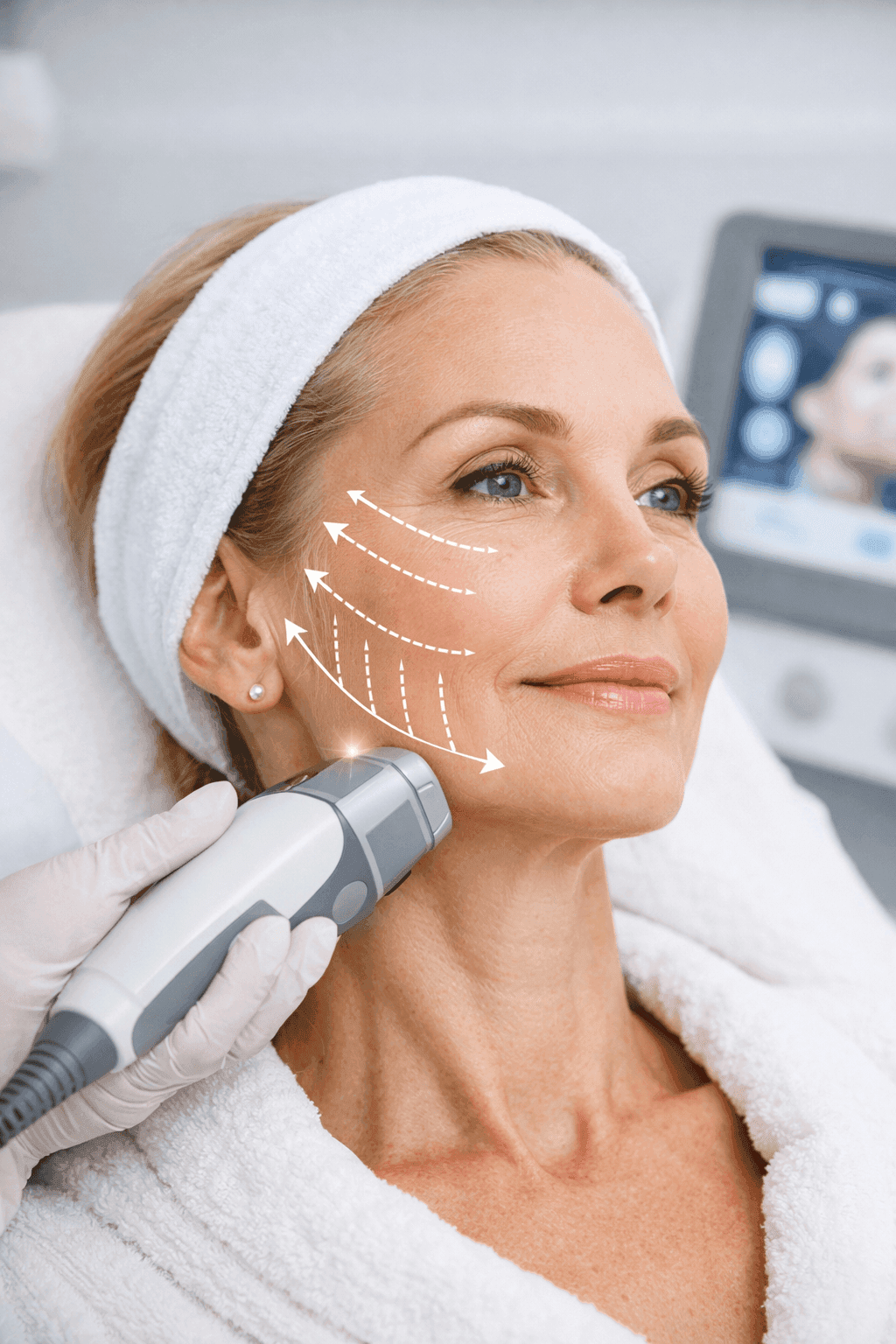
Practitioner performing non-surgical face lifting treatment using ultrasound device.
Ultrasound face lifting for natural, gradual skin tightening.

Ages 30–35: Early Structural Support

In the early to mid-30s, subtle changes often begin to appear. Skin may recover more slowly, pores can look more visible, and facial contours may appear softer under certain lighting conditions. These changes are usually mild but signal a shift in collagen behaviour.


This is often the stage where early face tightening becomes relevant, particularly for individuals with high sun exposure or a history of acne-related inflammation.


Preventative tightening strategies may include:

  • low-intensity ultrasound

  • microneedling-based collagen support

  • early intervention for pigmentation and inflammation


Addressing uneven tone is particularly important at this stage, as pigmentation exaggerates shadows and can make skin appear less firm than it actually is. This is why treatments such as Laser Pigmentation Removal are often introduced alongside collagen-stimulating treatments to improve overall skin clarity and reflectivity.


Ages 35–40: Transition from Prevention to Correction

Between the ages of 35 and 40, collagen loss becomes increasingly noticeable, even if changes still feel subtle rather than dramatic. Early laxity may appear along the jawline or lower face, particularly during facial movement or when the skin is viewed from certain angles. Skin elasticity continues to decline, and the underlying support structure weakens gradually rather than suddenly, making this stage easy to underestimate.


This period often represents a psychological shift as well as a biological one. Many people begin to notice that skincare alone no longer delivers the same results, and recovery from stressors such as sun exposure, breakouts, or lack of sleep takes longer. As a result, non-surgical face lifting transitions from a purely preventative concept to a practical, corrective-support strategy.


Treatments during this stage focus on:

  • re-activating collagen production

  • supporting deeper structural layers

  • maintaining overall skin quality


Ultrasound-based treatments may be introduced conservatively to stimulate deeper collagen regeneration without creating an over-tightened appearance. These treatments aim to stabilise existing skin structure rather than dramatically lift tissue. At the same time, surface-level collagen support remains essential. Microneedling continues to play a key role in improving texture, resilience, and even collagen distribution, ensuring that deeper lifting results are visually supported at the surface.


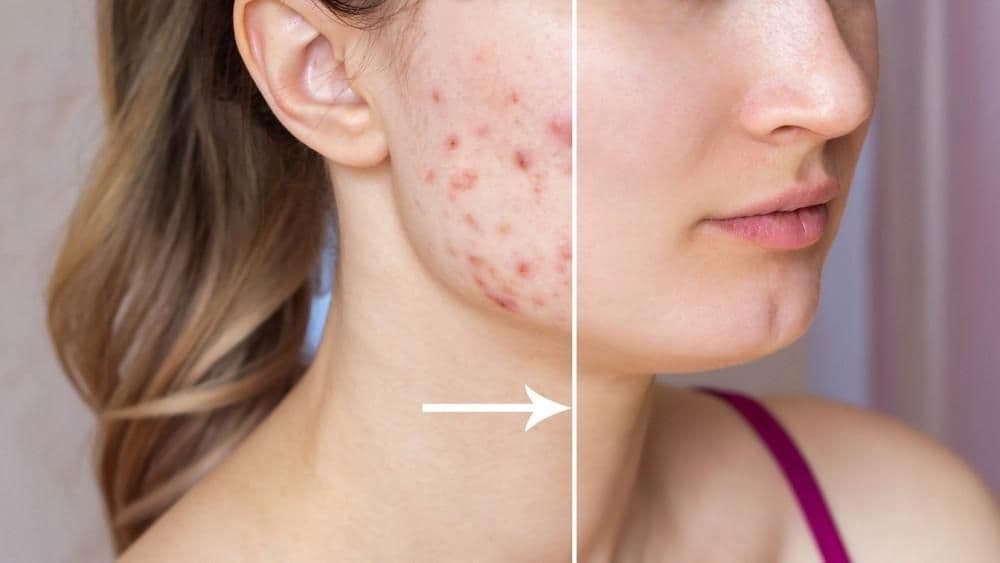
Acne treatment is also particularly important during this stage. Persistent inflammation accelerates collagen breakdown and can compromise tightening outcomes. By managing breakouts and reducing inflammatory cycles, the skin is better positioned to respond to face lifting treatments, resulting in more consistent and longer-lasting improvements.


Ages 40–45: Structural Lifting Becomes Relevant

Between the ages of 40 and 45, changes in skin structure become more apparent and more difficult to ignore. Collagen density declines more noticeably, and the combined effects of gravity, repeated facial movement, and volume redistribution begin to affect overall facial definition. The jawline may appear softer, the lower face less supported, and skin firmness may fluctuate depending on hydration, stress, or hormonal changes.


At this stage, structural lifting becomes a relevant and practical consideration, rather than an early intervention. While surface-level treatments can still support skin quality, they are no longer sufficient on their own to address deeper support loss. This is where non-surgical face lifting treatments that target deeper structural layers of the skin become increasingly valuable.


Ultrasound-based treatments are commonly introduced during this phase to stimulate collagen production at levels responsible for maintaining facial framework. Rather than focusing on tightness, the objective is reinforcement—strengthening the underlying support that holds facial contours in place. When applied conservatively and strategically, these treatments can improve definition while preserving natural facial movement.


Equally important is the management of contributing factors such as pigmentation and inflammation. Uneven tone can exaggerate shadows, while chronic inflammation accelerates collagen breakdown. Addressing these concerns alongside structural lifting helps create balanced, longer-lasting results that align with natural ageing rather than working against it.


Ages 45–50: Combination Strategies Matter Most

Between the ages of 45 and 50, skin ageing becomes increasingly multifactorial. Structural laxity, reduced collagen density, uneven pigmentation, and slower cellular turnover often coexist rather than appearing as isolated concerns. At this stage, relying on a single treatment approach is rarely sufficient to achieve balanced or sustainable results.


This is where combination strategies become essential. Structural lifting treatments help reinforce deeper support, but their visible impact depends heavily on surface skin quality and overall skin health. Without addressing pigmentation, texture irregularities, and chronic inflammation, lifting results can appear muted or uneven.


Ultrasound-based face lifting treatments are often combined with surface-level collagen stimulation to support results from multiple depths. Microneedling continues to play a critical role in maintaining dermal resilience and improving texture, while pigmentation management enhances light reflection and visual clarity. Acne treatment, although sometimes overlooked at this age, remains important because inflammation accelerates collagen degradation and compromises long-term firmness.


At this stage, treatment planning becomes less about dramatic correction and more about balance and maintenance. Thoughtful layering of treatments allows improvements in definition and firmness to develop gradually, resulting in outcomes that look natural and remain stable over time.


Ages 50–55: Maintenance and Support

By the early to mid-50s, collagen production has significantly declined, and structural changes are more established. Skin elasticity is reduced, regeneration slows, and facial contours may appear less defined even at rest. Non-surgical face lifting at this stage focuses primarily on maintenance, optimisation, and support, rather than reversal.


Results from lifting treatments tend to be more subtle, but when approached consistently, they can still provide meaningful improvements in firmness and contour. The emphasis shifts toward preserving existing structure, slowing further decline, and supporting skin quality over time. Aggressive or overly frequent treatments are rarely beneficial and may compromise skin resilience.


Consistency becomes more important than intensity. Regular collagen-stimulating treatments, combined with supportive skincare, sun protection, and inflammation control, help maintain results and prolong skin health. While expectations must remain realistic, a structured maintenance approach allows the skin to age more gracefully, retaining strength and definition rather than experiencing abrupt decline.


Final Thoughts: The Right Time Is About Strategy, Not Age

There is no single “correct” age at which everyone should start face lifting. Skin does not age according to a universal timetable, and visible changes are influenced by genetics, lifestyle, sun exposure, hormonal shifts, and the skin’s history of inflammation and repair. For this reason, the most effective approach to face lifting is not based on age alone, but on strategy.


Understanding how skin changes between 25 and 55 allows face lifting to be reframed as a progressive, adaptive process rather than a reactive solution. Early stages focus on preserving collagen and maintaining skin resilience. Mid-life stages prioritise structural support and controlled correction. Later stages emphasise maintenance, balance, and long-term skin health. When treatments are introduced at the right time and intensity, results tend to look natural rather than forced.


Equally important is recognising that face lifting does not work in isolation. Collagen stimulation is most effective when inflammation is controlled, pigmentation is managed, and skin quality is supported at multiple levels. Treatments such as microneedling, pigmentation removal, and acne management are not secondary considerations—they directly influence how well lifting results develop and how long they last.


Ultimately, the goal of non-surgical face lifting is not to stop ageing, but to age more intentionally. By aligning treatment choices with skin condition rather than urgency, it becomes possible to maintain firmness, definition, and skin confidence over decades. Education, timing, and consistency matter far more than dramatic intervention, and a well-informed approach remains the most reliable foundation for sustainable results.


Comments


Are you on the list?

Join to get exclusive offers & discounts

Thanks for submitting!

Shop

All Products

Promotion

Treatment

Bookings

Our Store

Franklin Branch:

96/235 Flemington Rd, Franklin ACT 2913

Trading Hours

Services are available by appointment only.

Kindly arrange your visit in advance.

City Branch:

Shop 7/240 City Walk, Canberra 2601

Trading Hours:

Saturday         10am–5:30pm
Sunday            10am–5:30pm
Monday           10am–5:30pm
Tuesday           10am–5:30pm
Wednesday    10am–5:30pm
Thursday         10am–5:30pm
Friday               10am–7:30pm

T: 0452399096

E: info@sycamoremedispa.com.au

Customer Service

T: +61 452 399 096

E: info@sycamoremedispa.com.au

  • wechat (1)_edited
  • Instagram
  • Facebook

© 2022 SYCAMORE MEDI SPA

bottom of page