Ultherapy PRIME vs Microneedling: Does Your Face Need Tightening or Better Skin Quality?
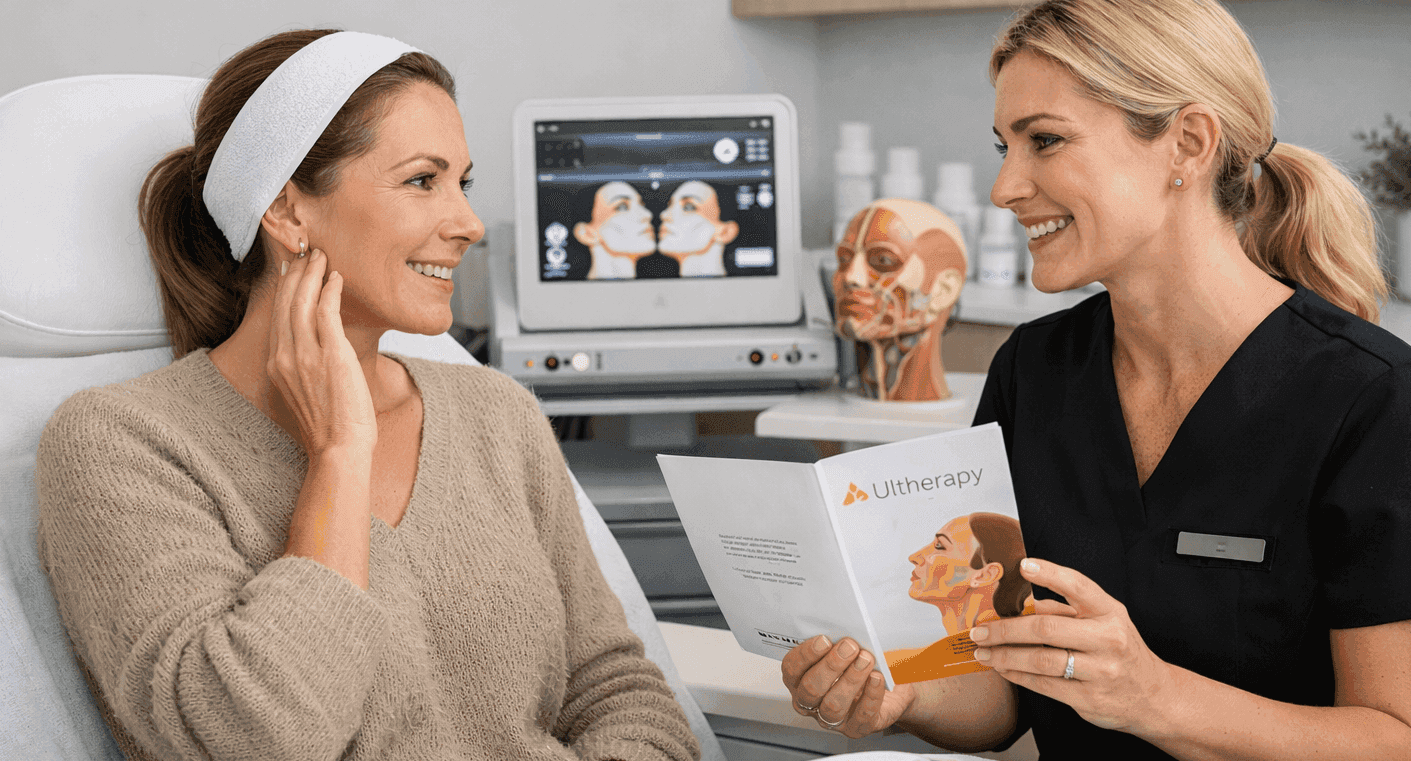
There is a moment that sends a lot of people searching for a new skin treatment. You look in the mirror, or maybe catch yourself in a photo, and think:
“Why does my face suddenly look older?”
The problem is that “older” is not a treatment target.
Maybe your jawline looks softer than it used to. Maybe the lower face seems less firm. Or perhaps your facial shape has barely changed at all, but enlarged pores, acne scars, fine lines and rough texture are making the skin itself look less fresh.
Those two situations can feel similar in the mirror, but they lead to very different treatment conversations.
That is where Ultherapy PRIME Canberra and Microneedling Canberra become an interesting comparison. Sycamore Medi Spa places Ultherapy PRIME within its Anti-Aging Firming and Lifting category, while Meso Microneedling sits within Skin Rejuvenation. That distinction gives us the simplest starting point for this article:
Are you trying to change the way your face sits—or the way your skin looks?
The Mirror Test: Look at the Outline First
Forget wrinkles for a moment and look at the outline of your face.
Has your jawline become less defined? Do you notice mild laxity beneath the chin? Does the lower face seem softer than it did several years ago? Are you lifting the skin slightly with your fingers when you look in the mirror because you prefer the contour that creates?
Those observations point towards a lifting and tightening conversation.
Sycamore describes Ultherapy PRIME as a non-invasive ultrasound treatment intended for clients experiencing some degree of skin laxity or loss of elasticity. Its listed FDA-cleared lifting areas include the neck, under the chin and brow, while the technology also addresses lines and wrinkles on the décolletage.
Now try something different.Instead of looking at the outline, move closer to the mirror and look at the actual surface. Is the facial contour reasonably where you want it, but old acne scars catch the light? Do pores seem prominent? Does the skin look rougher or less refined?
That starts moving the conversation towards skin quality and microneedling.
Sycamore's existing Microneedling Canberra guide discussesthe treatment particularly in relation to concerns such as uneven texture, old acne marks, pores and fine lines.
Already, “my face looks older” has become two much more useful questions.
Ultherapy PRIME Works Below the Surface—Because the Surface Isn't Always the Problem
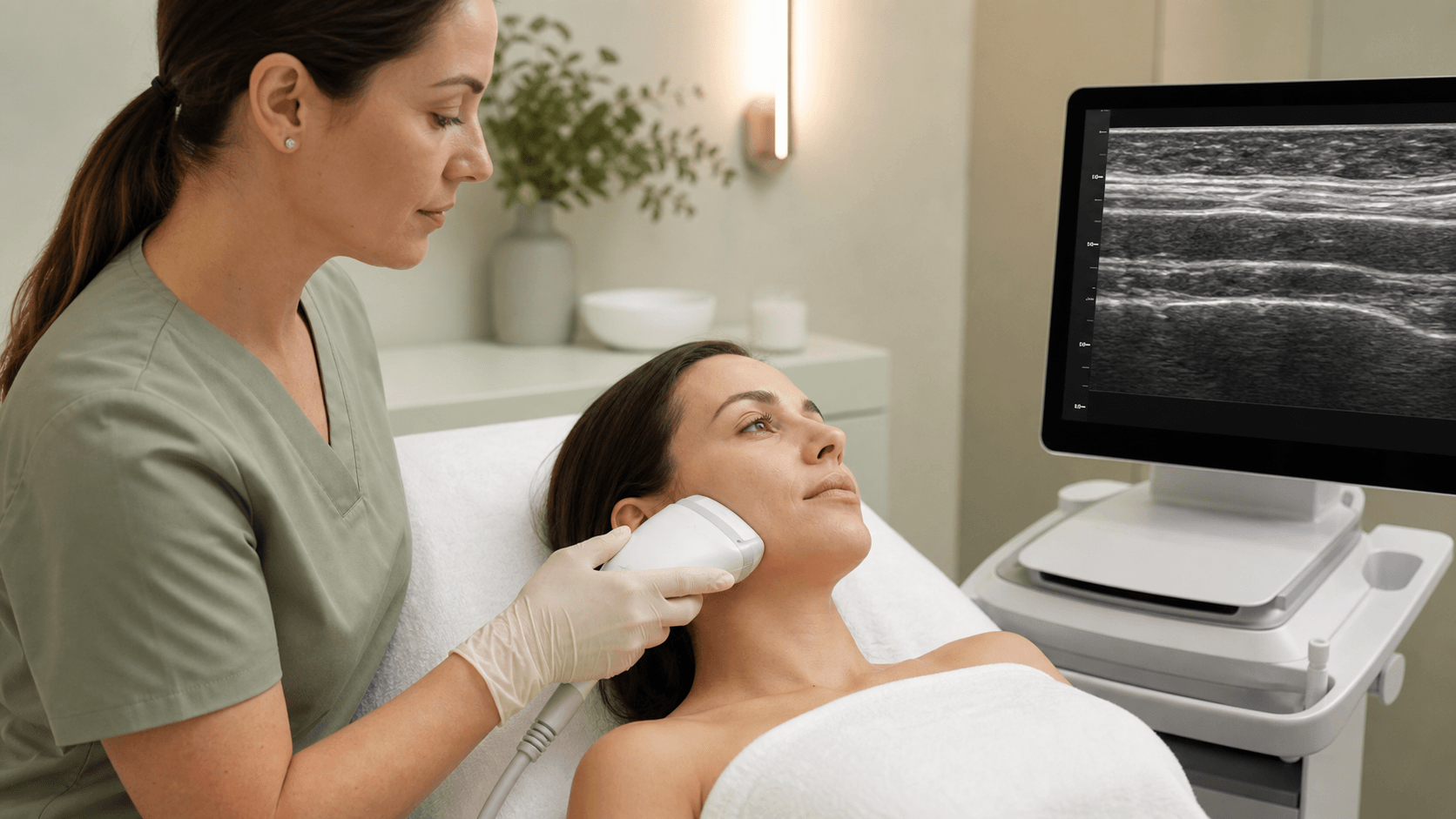
Ultherapy PRIME is interesting because the treatment isn't primarily about polishing the outermost appearance of the skin.The platform uses focused ultrasound energy and real-time ultrasound imaging. Sycamore explains that this imaging allows the practitioner to visualise tissue layers and personalise where energy is delivered. The treatment is designed to stimulate the body's collagen-building response, with results developing gradually rather than creating an immediate surgical-style transformation.
This is why Face Tightening Canberra searches often lead towards technologies such as Ultherapy PRIME.
Imagine that your skin surface is relatively smooth. You don't particularly care about pores. Acne scarring isn't an issue. Pigmentation isn't your priority either.
What bothers you is the shape.In that scenario, improving surface texture alone may not address the thing you keep noticing in photographs.Sycamore's previous Ultherapy PRIME Canberra content also focuses on this non-surgical lifting role rather than presenting Ultherapy as an all-purpose facial (https://www.sycamoremedispa.com.au/blog/ultherapy-prime-in-canberra-the-next-generation-in-non-invasive-skin-lifting-at-sycamore-medi-spa).That distinction matters. A treatment doesn't need to do everything to be useful. It needs to do the right job.
Microneedling Starts With a Completely Different Idea
Microneedling approaches the skin from another direction.Instead of focused ultrasound energy being delivered into selected tissue layers for a lifting response, microneedling creates controlled microscopic injuries that trigger a wound-healing response.This is why the conversation often centres on collagen remodelling, texture and scarring.
A systematic review of 33 studies found improvement in acne-scar appearance following microneedling, although the authors noted inconsistent evidence when comparing microneedling alone with combination treatments and fractional lasers. Another systematic review of randomised controlled trials concluded that microneedling was an effective and generally well-tolerated option for atrophic acne scars, while also calling for larger and longer studies.
Sycamore similarly describes Microneedling in Canberra around skin texture, enlarged pores, acne scarring and skin quality rather than positioning it as the equivalent of an ultrasound lift.
So if your complaint is:
“My jawline is getting softer.”
and your friend's complaint is:
“My acne is gone, but my skin still looks uneven.”
you probably shouldn't automatically book the same treatment just because you are the same age.
Here's the Confusing Part: Both Treatments Talk About Collagen
This is where aesthetic marketing can make everything sound identical.Search almost any professional rejuvenation procedure and sooner or later you will encounter the word collagen. Ultherapy PRIME talks about stimulating collagen. Microneedling is also associated with collagen induction and remodelling.
So aren't they basically doing the same thing?
No.
The presence of the word “collagen” doesn't mean two treatments have the same mechanism, depth, clinical objective or ideal candidate.Think about exercise. Swimming and weight training both involve muscles, but that doesn't make them interchangeable workouts. What you choose depends on the outcome you're trying to achieve.
The same logic is useful here.Ultherapy PRIME uses ultrasound energy with real-time visualisation and is positioned around non-surgical lifting and tightening. Microneedling creates controlled micro-injury and is commonly considered when skin texture and scarring are central concerns. Sycamore itself places them in separate treatment categories—Anti-Aging Firming and Lifting versus Skin Rejuvenation. “Stimulates collagen” is therefore the beginning of the explanation, not the end of the treatment decision.
Are Your Fine Lines Coming From Texture—or Laxity?
Fine lines make the comparison more complicated because they can sit somewhere between these categories.
Not every line appears for exactly the same reason. Skin quality, repetitive facial movement, photoageing, collagen changes and structural ageing can all influence what you see.
If your concern is mainly a crepey or uneven surface with fine textural changes, a skin-rejuvenation approach may enter the conversation. Microneedling has been studied beyond acne scars, including for skin rejuvenation and wrinkles, although systematic reviews also point out limitations in the evidence base and variation in treatment protocols.
But if the lines appear alongside noticeable laxity—particularly around areas where the skin itself seems less supported—then Face Lifting or Face Tightening may be the more relevant category to investigate.
Ultherapy PRIME also has specific cleared treatment areas and should not simply be assumed to treat every line anywhere on the face. Sycamore lists lifting of the brow, neck and under-chin area, alongside improvement of lines and wrinkles on the décolletage.
This is why saying “I have wrinkles” still doesn't completely answer the treatment question.
Where are they, what do they look like, and what is contributing to them?
What If Your Main Concern Is Your Jawline?
This one is easier.If the reason you started researching treatment is that your lower face seems less defined, Ultherapy PRIME Canberra is much closer to the search intent than microneedling.But even here, expectations need some restraint.A soft jawline is not always caused by skin laxity alone. Facial anatomy, fat distribution, skeletal structure and age-related tissue changes can all influence facial contour. Someone may look at their jawline and assume “loose skin” when several factors are actually contributing.That is why Sycamore describes Ultherapy PRIME as suitable for those experiencing some degree of skin laxity or loss of elasticity, while also clearly stating that it will not duplicate the results of a surgical facelift.
Microneedling, meanwhile, isn't generally the logical first choice if your only complaint is:
“I want this jawline lifted.”
It may support aspects of skin quality, but asking a texture-focused treatment to create a structural lifting result sets up the wrong expectation before treatment even begins.
What If Your Main Concern Is Acne Scarring?
Now the direction changes.Imagine your facial contour hasn't changed much, but acne from several years ago has left shallow depressions and uneven texture across the cheeks. Under soft bathroom lighting it looks manageable. Under direct sunlight or overhead office lighting, every irregularity suddenly seems more obvious.That is exactly the kind of concern that can make people say their skin looks “older” even when laxity isn't actually the main problem.Microneedling has a much more direct evidence base here. Research has repeatedly evaluated it for atrophic acne scars, including systematic reviews covering both microneedling alone and combination approaches.
Sycamore's Microneedling Canberra: What to Know Before Booking Your First Treatment also discusses acne scars, texture and overall skin quality as common reasons clients start considering professional microneedling.
Ultherapy PRIME would therefore be solving a different problem.Again, the question isn't “Which technology is more advanced?”It's “What am I actually asking the technology to change?”
The Photo Test Can Help You Understand What Is Bothering You
Here is another simple way to think about it. Take two photographs of your face—not for diagnosis, but simply to help you describe your concern during consultation. For the first, stand farther from the camera and look at the overall facial outline. Ignore individual pores and spots. Does the lower face look softer? Is the under-chin area what catches your attention? Does the brow area seem to be the issue?Now take a closer photograph in even natural light and look at the surface of the skin. Do scars, pores, roughness and fine textural irregularities bother you more than the facial shape itself? The first photograph may make you think about lifting. The second may make you think about skin quality. This isn't a substitute for professional assessment, but it can help you walk into a consultation with something more useful than “I just want to look younger.”
Sycamore's broader Canberra Skin Treatments guide makes a similar point: treatments such as pigmentation laser, microneedling and Ultherapy should not necessarily be viewed as competitors because they can address different parts of the same overall skin concern.
You May Actually Have Both Problems
This is where the comparison becomes more realistic. You can have mild lower-face laxity and old acne scars. You can notice a softer jawline while simultaneously becoming frustrated by pores and uneven texture. You can want a more defined facial contour but still wish your skin looked smoother when you aren't wearing makeup. In that situation, choosing between Ultherapy PRIME and microneedling as though one must permanently defeat the other doesn't make much sense.
Instead, the useful questions become: Which concern bothers me most? Which should be prioritised? How should treatments be spaced? And is my skin currently suitable for both?
Sycamore specifically advises avoiding aesthetic procedures such as laser and microneedling for at least two weeks after Ultherapy PRIME, which is a practical reminder that combining goals does not mean piling procedures on top of one another without a plan.
A treatment journey may therefore happen in stages.
The goal isn't to collect as many technologies as possible. It is to make sure each one has a clear job.
Which Concern Should You Treat First?
When both laxity and texture bother you, it can be tempting to ask whether Ultherapy PRIME and microneedling can simply be done together. But a better first question is: which change would make the biggest difference to how you feel about your face? Imagine that your jawline became slightly firmer tomorrow but your acne scars stayed exactly the same. Would you be happy with the improvement? Now reverse it. Imagine your skin became smoother and more refined, but the softness around your lower face remained. Which result would matter more to you? That thought experiment can help turn a vague goal like “I want to look younger” into a much clearer treatment priority.
Treatment order also shouldn't be copied from somebody else's routine online. Skin condition, previous procedures, treatment areas and individual goals can all influence how a professional plans different procedures. Sycamore's Ultherapy PRIME treatment information specifically advises leaving time between Ultherapy PRIME and procedures such as microneedling, reinforcing the idea that multiple concerns are better approached as a planned journey rather than a treatment stack. Someone primarily bothered by Face Lifting and Tightening may decide to address laxity first and reassess texture afterwards, while someone whose acne scars dominate every photograph may place Microneedling Canberra higher on the priority list. There isn't one sequence that automatically applies to everyone—the important part is making sure each treatment has a clear reason for being there.
Don't Judge Ultherapy and Microneedling on the Same Timeline
Another easy mistake is expecting both treatments to reveal their final result at the same speed. When you pay for a professional treatment, naturally you want to look in the mirror and decide whether it “worked”. But collagen-related treatments are not necessarily best judged a few days later. Sycamore explains that results from Ultherapy PRIME develop gradually as new collagen is produced, with improvements becoming more noticeable over the following months. That makes sense for a treatment designed around gradual Face Tightening rather than an instant facelift effect.
Microneedling also involves a biological repair and remodelling process rather than simply changing the appearance of the skin for one afternoon. Published research into microneedling for acne scars evaluates improvement across treatment courses and follow-up periods rather than treating the immediate post-procedure appearance as the final result. This means your before-and-after expectations should match the treatment you actually chose. If you're using Ultherapy PRIME for laxity, pay attention to changes in areas such as facial contour and firmness over the appropriate timeframe. If you're using microneedling for texture, evaluate the concern that led you there—such as acne scars or uneven surface quality. Skin Rejuvenation Canberra is not a race to see which procedure produces the fastest mirror change; the more useful measure is whether the treatment gradually improves the specific problem it was selected to address.
What If Your Skin Looks Older in Photos but You Can't Explain Why?
Sometimes the hardest part isn't choosing between Ultherapy PRIME and Microneedling—it is working out what has actually changed. You may not see an obvious sagging jawline or deep acne scars, yet recent photographs somehow look less fresh than older ones. This is where it helps to stop using “ageing” as one broad category and look at the face in layers. Facial contour can change as skin and supporting tissues change over time, while the skin surface can simultaneously develop fine lines, enlarged-looking pores, roughness and other textural changes. Sun exposure can add another dimension by creating uneven pigmentation. All of these changes can contribute to the impression that a face looks older, but they do not necessarily respond to the same treatment. This is why Sycamore's wider Skin Rejuvenation Canberra treatment range includes technologies aimed at different concerns rather than offering one universal “anti-ageing” procedure.
A useful exercise is to identify the first thing your eye notices in a photograph. If you keep focusing on the outline of the lower face, the area beneath the chin or a loss of definition, then a Face Tightening Canberra conversation may be appropriate and Ultherapy PRIME becomes relevant. If the outline still looks relatively similar but the cheeks appear rougher because scars, pores or fine textural irregularities catch the light, Microneedling Canberra may deserve more attention. And if what makes the photograph look different is mainly brown spots or uneven colour, you may actually need to step outside this comparison and investigate pigmentation-focused treatments instead. Sycamore's article on Pigmentation Removal Laser Canberra is a useful example of how another concern can create the same vague feeling that the skin looks “older”. Breaking the face into contour, texture and colour makes treatment selection much clearer than trying to find one procedure that promises general rejuvenation.
Why the “Strongest Treatment” Isn't Necessarily the Best Treatment
A lot of aesthetic-treatment research eventually turns into a search for the strongest option. People compare how deeply a device works, how much energy it uses, how dramatic the before-and-after photographs look or which treatment sounds more “medical”. But strength is not a useful advantage when the treatment is targeting the wrong concern. If your main issue is atrophic acne scarring and uneven surface texture, choosing a lifting treatment simply because it works at deeper tissue levels doesn't automatically make it a better option. In the same way, choosing microneedling because you have heard that it stimulates collagen doesn't mean it should be expected to produce the same type of lifting outcome as a technology specifically positioned around non-surgical tightening. Published research supports microneedling particularly in areas such as atrophic acne-scar improvement, while Ultherapy PRIME is positioned by Sycamore around ultrasound-based lifting and tightening. The technologies can therefore both be sophisticated while still having very different reasons for being selected.
This is also why treatment intensity shouldn't become the goal itself. A successful Skin Rejuvenation Canberra plan isn't necessarily the one containing the greatest number of procedures or the strongest available technology. It is the one where each treatment has a clearly defined purpose. Someone with relatively firm facial contours but noticeable acne scarring may gain little from chasing Face Lifting simply because it sounds more dramatic. Someone with smooth skin but increasing lower-face laxity may not solve their main concern by repeatedly focusing on surface texture. And someone with both concerns may eventually consider both approaches, but that still doesn't mean everything should be performed at once. Sycamore's full treatment range makes this distinction useful: pigmentation, skin rejuvenation and firming/lifting treatments exist as different categories because “looking younger” can involve several completely different treatment targets. The best technology isn't automatically the strongest one—it is the one that matches the change you actually want to make.
Skin Rejuvenation Doesn't Always Mean Face Lifting
The phrase Skin Rejuvenation Canberra creates another source of confusion because it is such a broad category.For one person, rejuvenation means smoother skin. For another, fewer visible acne scars. Someone else wants more even pigmentation. Another person is almost entirely focused on a firmer jawline.
All four may say:
“I want my face to look fresher.”
But their treatment plans shouldn't automatically look identical.
Sycamore's treatment menu makes this distinction particularly clear. IPL, DPL, Meso Microneedling, LDM and WishPro appear within Skin Rejuvenation, while Ultherapy PRIME, Ultraformer III, LIFTERA COOL and Diamond Polar are grouped within Anti-Aging Firming and Lifting.
That doesn't mean the categories can never overlap in their aesthetic effects. It means their primary roles are different enough that asking for “rejuvenation” alone isn't specific enough.
Before choosing a treatment, finish the sentence:
“I would be happiest if my treatment improved…”
The answer may tell you much more than the word “anti-ageing” ever could.
What About Downtime?
Treatment experience can also influence the decision.
Sycamore describes Ultherapy PRIME as a zero-downtime treatment, although its aftercare information notes that mild redness or swelling may occur and can resolve over hours to days.
Microneedling intentionally creates controlled micro-injury, so temporary visible skin responses form a different kind of post-treatment conversation. This is something worth considering if you're trying to schedule treatment around work, events, travel or photography.
But downtime should not become the only deciding factor.
Choosing a treatment because it fits your calendar while ignoring whether it fits your concern is backwards. First decide whether you are trying to improve laxity or skin quality. Then discuss how the appropriate treatment fits your schedule.
If you are new to microneedling, Sycamore's first-treatment guide is a useful next step before booking.
Don't Choose Based on Age Alone
You will sometimes see aesthetic treatments described almost like birthday milestones. Microneedling in your 20s. Ultherapy in your 30s. Something stronger in your 40s. Real faces do not age according to an Instagram timetable. A person in their late 30s may have very little laxity but noticeable acne scarring. Another person of exactly the same age may have smooth skin but be bothered by early changes around the jawline. Their ages match. Their treatment goals don't. That is why Ultherapy PRIME vs Microneedling is better understood through anatomy and concern rather than age. Microneedling does not automatically become “too weak” when someone reaches a certain birthday, and a lifting treatment does not automatically become necessary simply because someone has entered their 30s or 40s. If there is no meaningful laxity to address, chasing a lifting treatment because you think you are “old enough” misses the point. Likewise, if texture is not bothering you, you don't need microneedling simply because everyone around you is doing it.
Ultherapy PRIME vs Microneedling: Which One Makes More Sense?
Try reducing the whole article to one decision.
If you look in the mirror and think: “My face shape looks softer. I want to explore non-surgical lifting and tightening.” Then Ultherapy PRIME Canberra is the more relevant conversation to start. If you think: “My facial shape is fine, but my skin surface looks rough, scarred or uneven.” Then Microneedling Canberra may be the more logical direction to explore.
If you think: “Actually, both bother me.” Then you don't necessarily need to choose a permanent winner. You need a treatment plan that separates those concerns, prioritises them appropriately and considers timing.
And if what bothers you is actually brown pigmentation rather than laxity or texture, neither treatment comparison fully answers your question. Sycamore offers a wider range of targeted skin treatments and skin rejuvenation options, which is exactly why identifying the concern comes before choosing the technology.
You can learn more from Sycamore's dedicated Ultherapy PRIME treatment page, explore the clinic's Microneedling Canberra guide, or browse the complete Sycamore treatment range before deciding which conversation you want to have at consultation.
Because “I look older” isn't really the problem.
The useful question is whether you're seeing a change in your facial structure—or a change in the quality of the skin covering it.